
Top AI Tools in HR: Transform Your Talent Management in 2026
Human Resources departments face unprecedented pressure. You're managing recruitment across competitive talent markets, onboarding new employees efficiently, tracking performance across distributed teams, and predicting employee turnover before it happens. Traditional HR software can help—but it's manual, time-consuming, and often reactive rather than strategic.
Artificial intelligence is fundamentally transforming how organizations manage human capital. Modern AI tools streamline recruitment, automate onboarding, predict employee engagement, and provide real-time workforce insights. Rather than replacing HR professionals, these tools amplify their impact—freeing teams from administrative overhead to focus on strategic talent management and employee development.
This comprehensive guide explores the top AI tools reshaping HR in 2026. Whether you're scaling rapidly, improving retention, or modernizing outdated systems, you'll find proven solutions tailored to your organizational needs. Each tool is evaluated for real-world effectiveness, integration capability, and ROI potential across different company sizes.

Why AI is Essential for Modern HR: The Business Case
The numbers tell a compelling story. Organizations implementing AI-powered HR tools report measurable improvements:
- Time-to-hire reduced by 40%: Automated resume screening and candidate matching accelerate recruitment cycles dramatically
- Turnover prediction accuracy of 85%+: Predictive models identify at-risk employees months before departure, enabling proactive retention
- Employee engagement scores increase 25%: Personalized development recommendations and real-time feedback loops enhance engagement
- HR administrative time reduced 50%: Chatbots, automated workflows, and self-service portals eliminate routine inquiries
- Better hiring quality: AI reduces bias in screening, identifying top candidates based on skills and potential, not demographics
Strategic Advantage
AI doesn't replace HR professionals—it amplifies their impact. Spend less time on administration, more time on strategy and talent development.
Top AI Tools in HR: Complete Breakdown
Here are the leading AI solutions transforming HR across recruitment, onboarding, performance management, and employee engagement. Each tool is positioned for specific organizational needs and company sizes.
Quick Overview: 10 Best AI Tools for HR
- iCIMS with Copilot: Full recruitment automation with AI-generated job descriptions and interview guides
- Workday: Enterprise HCM platform with integrated AI for talent analytics and succession planning
- Lattice: Performance management and employee engagement with predictive retention analytics
- Paradox (Olivia): High-volume hiring automation through conversational AI chatbots
- BambooHR: SMB-focused with AI performance reviews and turnover prediction
- Eightfold AI: Talent intelligence with matching to 1B+ candidate profiles
- HireVue: AI video interviewing with bias-mitigation algorithms
- Rippling: Integrated HR automation reducing tool fragmentation
- Zoho People: Affordable with sentiment analysis, shift scheduling, and burnout prediction
- Moveworks: 24/7 HR chatbot supporting 100+ languages
Recruitment & Talent Acquisition Tools
AI transforms recruitment from a manual, biased process into data-driven talent discovery. These tools accelerate hiring cycles, improve candidate quality, and reduce bias in screening.
1. iCIMS with Copilot
Best for Comprehensive Recruitment AutomationCoverage: Job posting to offer acceptance | Company Size: Mid-market to enterprise | Pricing: Custom (enterprise)
iCIMS Copilot generates job descriptions, crafts personalized candidate emails, prepares interview guides, and ranks candidates automatically. The platform learns from past hiring decisions, improving matching accuracy over time. Integration with interview scheduling eliminates manual scheduling friction.
Key Features: AI job description generation, interview guide creation, candidate ranking, email personalization, scheduling automation | AI Capability: Copilot understands role requirements, generates interview questions reducing bias | ROI Driver: Reduces time-per-hire by 40%, improves candidate experience | Best For: Companies hiring 50+ annually
2. Paradox (Olivia AI)
Best for High-Volume HiringSpecialty: Conversational AI for candidate engagement | Industry Fit: Retail, hospitality, healthcare | Pricing: Available on request
Olivia chatbot engages candidates in natural conversation, screens applications, schedules interviews, and sends confirmations—all without human intervention. Perfect for high-volume roles where traditional screening creates bottlenecks. SMS and chat-based interaction aligns with candidate preferences.
Key Features: Conversational screening, SMS engagement, interview scheduling, SMS reminders, application support | AI Capability: Natural language understanding drives candidate experience | ROI Driver: Dramatically reduces recruiting team workload in high-volume scenarios | Best For: Retail, hospitality, customer service hiring (100+ roles/year)
3. HireVue
Best for Standardized, Bias-Reduced InterviewsCore Function: AI video interview analysis | Assessment Depth: Tone, language patterns, communication style | Pricing: Custom enterprise
HireVue replaces one-way video interviews with structured, bias-reducing assessment. Candidates respond to standardized questions recorded on video. AI analyzes responses for communication effectiveness, not demographic characteristics. Reduces hiring bias while ensuring every candidate gets consistent evaluation.
Key Features: Video interview analysis, candidate scoring, predictive performance assessment, structured assessment | AI Capability: Computer vision and speech analysis identify communication patterns | ROI Driver: Standardized assessment improves candidate quality and reduces legal exposure from discrimination claims | Best For: Large-scale hiring with fairness requirements
4. Eightfold AI
Best for Talent Intelligence & Internal MobilityDatabase Access: 1B+ candidate profiles | Focus: Internal and external matching | Pricing: Enterprise custom
Eightfold connects job requirements to 1 billion candidate profiles, identifying qualified candidates who might not appear in traditional searches. Beyond external recruitment, it maps internal talent, suggesting career paths and identifying high-potential employees for development programs.
Key Features: Talent matching, internal mobility recommendations, career pathing, diversity compliance tracking | AI Capability: Massive dataset enables pattern matching across industries and roles | ROI Driver: Reduces external hiring costs through internal mobility, identifies succession candidates | Best For: Enterprise companies with 500+ employees focused on mobility
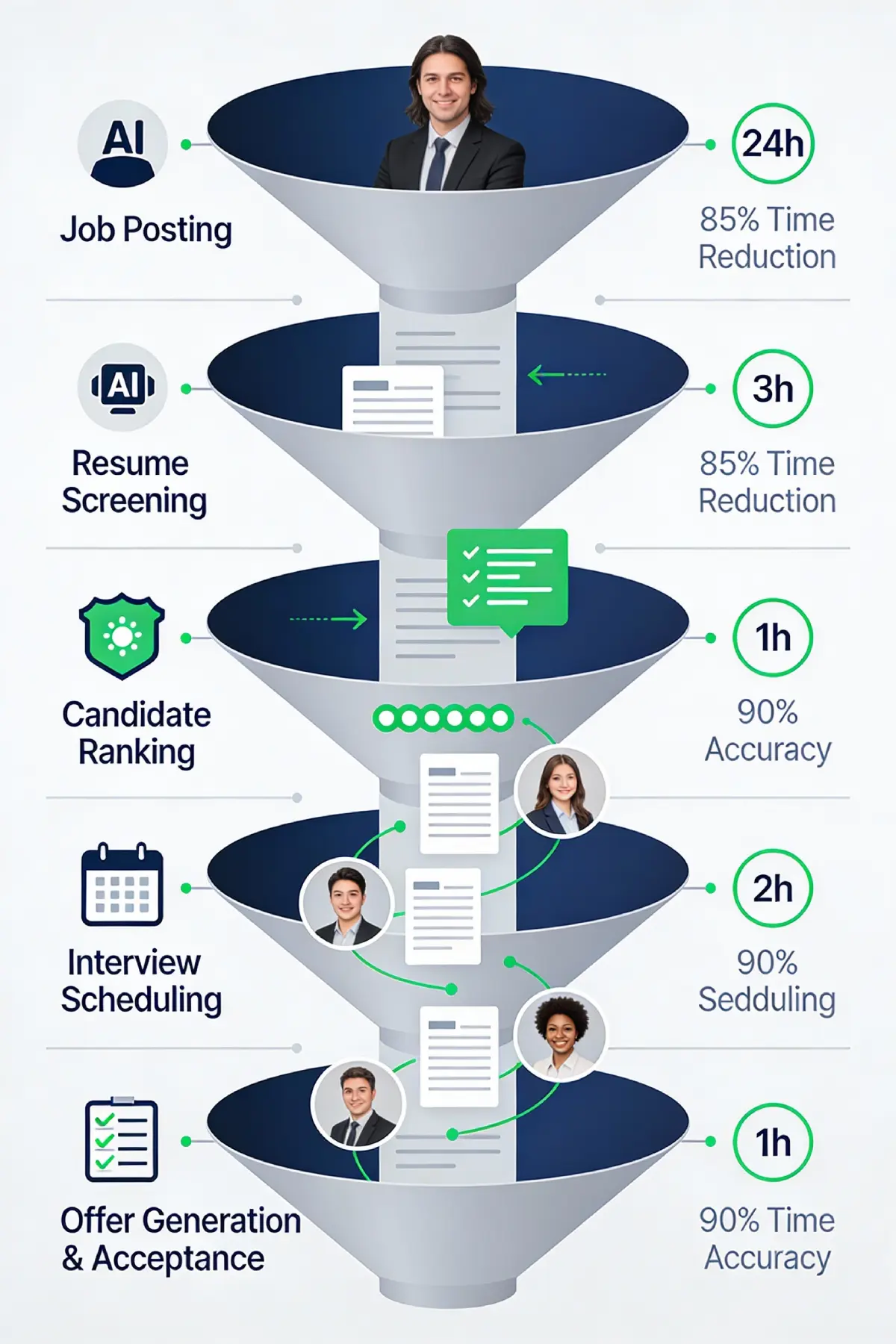
Resume Screening & Candidate Matching
Modern AI doesn't just search resumes—it understands them. These tools extract relevant information, match skills to requirements, and identify top candidates automatically.
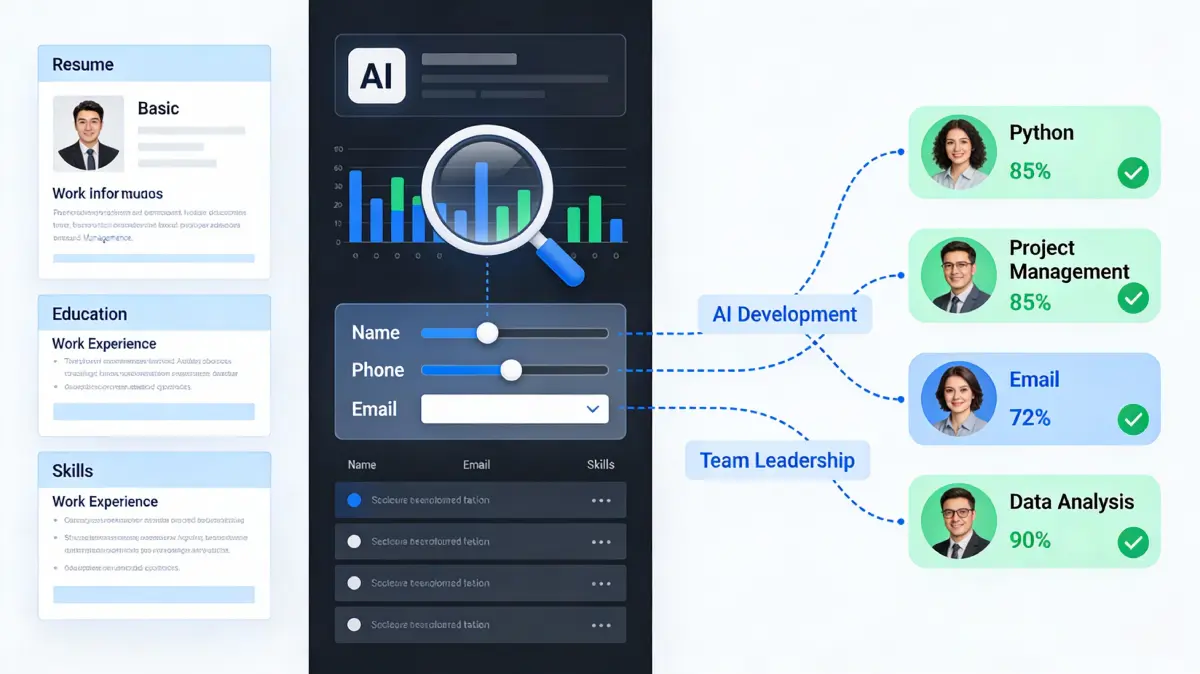
5. Ideal
Best for Automated Resume ScreeningSpecialty: Machine learning resume parsing and ranking | Data Source: Learns from past hiring decisions | Pricing: Custom
Ideal analyzes hundreds of applications, automatically identifying candidates matching job requirements. Machine learning learns from your past hiring decisions, improving accuracy over time. Reduces applications reaching human reviewers from 500+ to 5-10 top candidates.
Key Features: Resume parsing and ranking, application filtering, learnable criteria | AI Capability: Machine learning improves matching as hiring patterns emerge | ROI Driver: Reduces recruiter workload dramatically, ensures top candidates are never missed | Best For: High-volume recruiting teams
Employee Onboarding & Integration Tools
Effective onboarding sets employees up for success. AI automates the process while personalizing the experience, ensuring new hires integrate quickly into company culture.
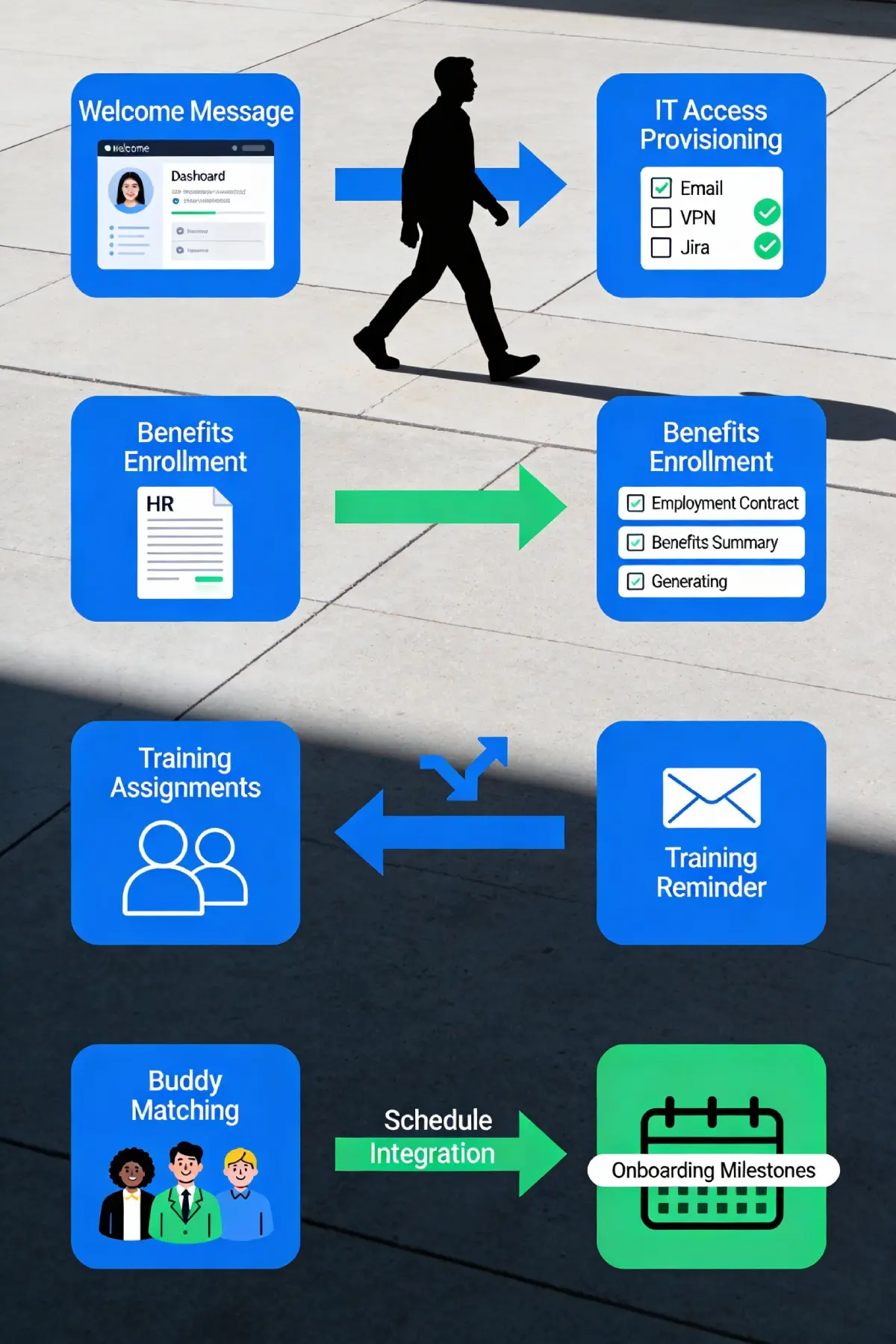
6. Rippling
Best for Integrated HR AutomationPlatform Scope: Recruiting, payroll, compliance, benefits, IT in one system | Target: Growing companies | Pricing: Custom
Rippling eliminates tool fragmentation through unified HR automation. New hire data flows automatically across recruiting, payroll, IT provisioning, and benefits enrollment. AI handles compliance requirements, ensuring nothing falls through the cracks during rapid scaling.
Key Features: Unified employee data, automated workflows, IT provisioning, compliance automation, benefits integration | AI Capability: Handles rule-based automation and compliance requirements | ROI Driver: Replaces 3-4 separate tools, reduces data entry errors, ensures compliance | Best For: Growing companies (50-500 employees)
Performance Management & Employee Engagement
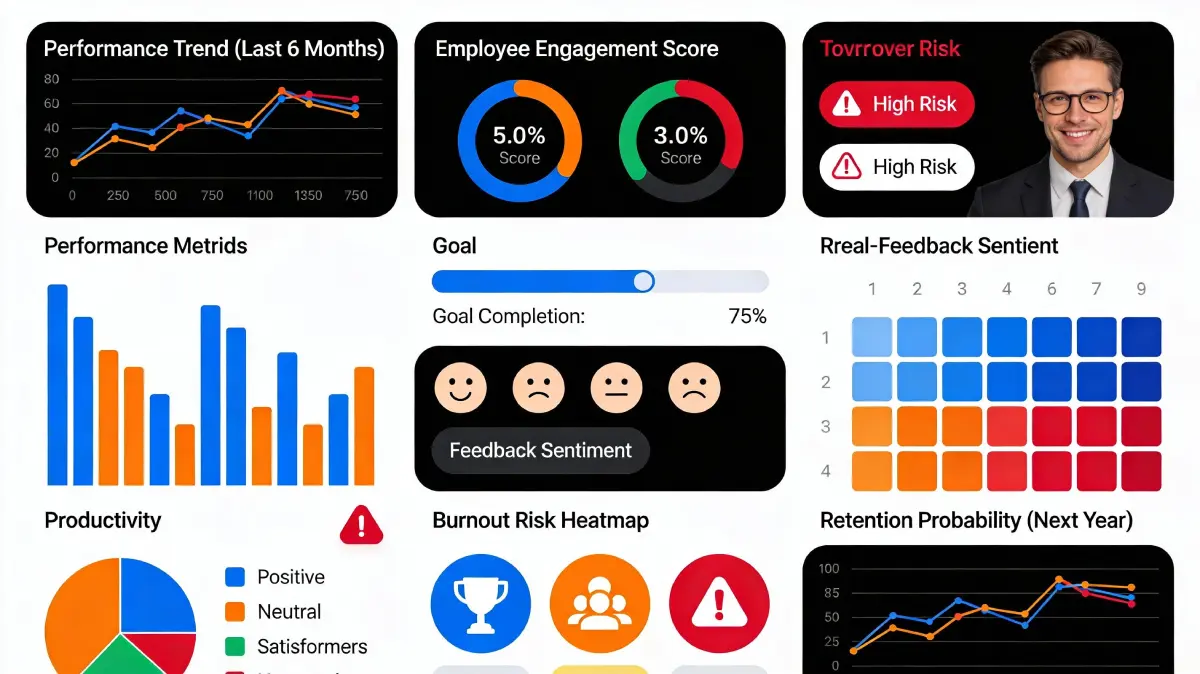
Predictive analytics and real-time feedback transform performance management from annual reviews to continuous development. These tools identify retention risks, predict performance, and enhance employee satisfaction.
7. Lattice
Best for Predictive Employee AnalyticsStrength: Retention prediction and engagement analytics | Ideal For: Companies prioritizing retention | Pricing: Custom
Lattice predicts which employees are likely to leave 6-12 months before departure. Real-time engagement scoring identifies disengagement patterns. AI suggests personalized interventions—career conversations, development opportunities, or role adjustments. Prevent turnover before it happens.
Key Features: Turnover prediction, engagement scoring, career pathing, real-time feedback, AI coaching suggestions | AI Capability: Predictive models identify at-risk employees, suggests retention strategies | ROI Driver: Prevent costly turnover through early intervention | Best For: Companies with turnover problems or retention goals
8. BambooHR
Best for SMB Performance ManagementSweet Spot: 20-500 employees | Approach: Intuitive with powerful AI features | Pricing: Typically $5-15/employee/month
BambooHR makes performance management accessible to small companies. AI generates performance review summaries, suggests development goals, and alerts managers to turnover risks. The interface is intuitive—complex AI operates invisibly in the background.
Key Features: AI-generated performance reviews, goal tracking, turnover alerts, time-off management | AI Capability: Learns from company patterns to predict issues | ROI Driver: Low cost with strong analytics—excellent value for SMBs | Best For: Small to medium businesses
9. Zoho People
Best for Affordable AI HR SuiteValue Proposition: Most comprehensive for lowest price | Target: Budget-conscious companies | Pricing: $2-4/employee/month
Zoho People delivers enterprise AI capabilities at SMB prices. Employee sentiment analysis identifies dissatisfaction before it leads to turnover. Smart shift scheduling optimizes coverage. Burnout prediction alerts managers to overworked employees. All at remarkably low cost.
Key Features: Sentiment analysis, smart scheduling, burnout detection, performance insights, automated leave approvals | AI Capability: Multi-layered AI across engagement, scheduling, and predictive analytics | ROI Driver: Exceptional value—delivers $10k of features at $2k cost | Best For: Budget-conscious companies of any size
HR Chatbots & Employee Self-Service
24/7 AI HR assistants handle employee questions, process requests, and provide support without human involvement. These tools dramatically reduce HR workload while improving employee satisfaction.
10. Moveworks
Best for Enterprise HR ChatbotsCapacity: Supports 100+ languages | Resolution Rate: Autonomously resolves 50%+ of HR queries | Pricing: Enterprise custom
Moveworks autonomous AI handles HR inquiries: PTO requests, benefits questions, payroll issues, onboarding information. Understands context across systems (PeopleSoft, Workday, SAP). Escalates only to human support when truly needed. Global enterprises use Moveworks to support worldwide workforces in their native languages.
Key Features: Multilingual support (100+), autonomous request resolution, system integration, intelligent escalation, analytics | AI Capability: Advanced NLP handles context-dependent HR queries | ROI Driver: Reduces HR support tickets by 50%+, enables smaller HR teams to support larger populations | Best For: Enterprise companies (1000+ employees) with global workforce
Enterprise HCM Platforms with Integrated AI
Large organizations need comprehensive platforms integrating recruitment, payroll, performance, and workforce analytics. These enterprise solutions handle complexity while leveraging AI throughout.
11. Workday
Best for Enterprise HCMCoverage: Complete HCM from recruitment to payroll to succession planning | Scale: Designed for 1000+ employees | Pricing: Enterprise custom
Workday integrates AI throughout the employee lifecycle. Recruiter Agent suggests candidates automatically. Predictive retention modeling identifies flight risks. Skill matching for internal mobility. Performance analytics guide development. Succession planning ensures leadership continuity. One integrated platform handles strategic HR.
Key Features: Recruiter Agent, predictive analytics, skills-based mobility, performance analytics, succession planning | AI Capability: Distributed AI across all HR functions, learns from organizational patterns | ROI Driver: Unified platform eliminates integrations, strategic analytics drive business value | Best For: Enterprise organizations (500+ employees)
AI HR Tools Comparison Matrix
Not all HR tools suit all organizations. Here's how the top solutions compare by key dimensions:
By Organization Size
| Company Size | Best Fit Tools | Typical Budget | Implementation Time |
|---|---|---|---|
| Startups (10-50) | Zoho People, BambooHR, Gusto | $2-8/employee/mo | 2-4 weeks |
| Growing (50-200) | Rippling, BambooHR, Paradox | $5-15/employee/mo | 4-8 weeks |
| Mid-Market (200-1000) | Lattice, iCIMS, Rippling, Zoho | Custom pricing | 8-12 weeks |
| Enterprise (1000+) | Workday, iCIMS, Eightfold, Moveworks | Custom enterprise | 12-24 weeks |
By Primary HR Function
| HR Function | Best Tools | AI Strength | Expected ROI |
|---|---|---|---|
| Recruitment | iCIMS, Paradox, HireVue, Eightfold | 40% faster hiring, improved quality | 3-6 months |
| Retention | Lattice, BambooHR, Zoho People | Turnover prediction 85%+ accurate | 6-12 months |
| Onboarding | Rippling, Leena AI, Workday | Faster integration, better adoption | Immediate |
| Employee Support | Moveworks, Leena AI, Paradox | 50%+ reduction in support tickets | Immediate |
| Performance Mgmt | Lattice, BambooHR, Workday | Continuous feedback replaces annual reviews | 3-6 months |
Implementing AI HR Tools: A Practical Guide
Phase 1: Assess Your Current State (Week 1-2)
Before selecting tools, understand your current pain points. Are you struggling with recruitment speed? Employee turnover? Onboarding efficiency? Performance management? Different problems require different solutions. Audit existing tools to identify gaps. This assessment prevents buying solutions to non-existent problems.
Phase 2: Identify Your Priorities (Week 2-3)
Rank HR functions by business impact. Which area drives greatest ROI improvement? Most organizations see faster ROI from recruitment automation or retention prediction than from performance management. Match tool selection to impact potential.
Phase 3: Test with Pilots (Week 4-8)
Request trials before committing. Use your next recruitment cycle or performance review process as pilot test. Evaluate ease of use, integration complexity, and actual time savings. Real usage trumps vendor promises.
Phase 4: Measure Success (Ongoing)
Define metrics before implementation: time-to-hire, turnover rate, time-per-performance-review, support ticket volume. Track these monthly. Most tools deliver ROI within 6-12 months. If not seeing promised improvements after 6 months, reassess tool fit.
Frequently Asked Questions About AI HR Tools
AI reduces but doesn't eliminate bias. Well-designed systems (like HireVue's) use controlled assessment reducing human bias. However, AI inherits biases from training data. If your company historically hired certain demographics, the algorithm might perpetuate that pattern. Best practice: use AI as one factor in hiring, not the sole decision. Combine automated screening with human review of final candidates. Regularly audit hiring data for demographic patterns. Responsible AI implementation improves fairness but requires oversight.
Pricing varies dramatically by maturity and scale. Startups can start with Zoho People at $2-4/employee/month. Mid-market tools (BambooHR, Lattice) typically run $5-15/employee/month. Enterprise solutions (Workday, iCIMS) cost $15-50+ per employee annually depending on modules. Hidden costs include implementation (often 20-30% of software cost), training, and integration with existing systems. Calculate total cost of ownership, not just software fees. Many tools offer free tiers—start there before committing budget.
Implementation time correlates to organizational size and system complexity. Small companies (50 employees) implementing Zoho People can go live in 2-4 weeks. Mid-market adoption of Rippling typically takes 8-12 weeks. Enterprise Workday implementations often take 4-6 months including data migration and customization. Factor in 2-4 weeks for user training and adoption. Plan for 30% longer timelines than vendors estimate—most implementations hit unexpected complexity. Quick wins in pilot projects accelerate organizational buy-in and momentum.
Most modern tools integrate with common platforms (ADP, Paychex, QuickBooks, Salesforce). However, integration complexity varies. Out-of-box integrations work for standard workflows; custom requirements need IT support. Rippling specifically designed for tight integration, reducing the need for separate tools. Before purchasing, request technical documentation on required integrations. Test integrations during pilot phase—many hidden compatibility issues only surface with live data.
Reputable HR tools comply with SOC 2, ISO 27001, and GDPR standards. Data is encrypted in transit and at rest. However, evaluate privacy policies—some tools may use your data for model training. Request data processing agreements (DPAs) before signing contracts. Enterprise tools offer higher security standards than budget options. Conduct security audits for PII (personally identifiable information) handling. Most breaches result from employee error, not tool failures—strong password policies and access controls matter as much as tool security.
AI doesn't typically eliminate HR positions—it transforms them. Recruiting teams spend less time screening resumes, more time evaluating top candidates and negotiating offers. HR business partners spend less time processing PTO requests, more time on retention and development strategies. Typical result: same-sized teams supporting 30-40% more employees. Some organizations consolidate redundant administrative roles, but displacement usually involves retraining rather than elimination. Forward-thinking organizations invest efficiency gains into strategic HR work—better employee development, better retention strategies, better culture building.
Define success metrics before implementation: time-to-hire (target 30-40% reduction), cost-per-hire, turnover rate, time-per-review, support ticket volume. Track these metrics monthly. Typical ROI timeline: recruiting tools pay back in 6-12 months; retention tools in 12-24 months. Calculate cost of problems solved (e.g., if turnover costs 50% of salary and you prevent 5 turnovers annually, that's substantial ROI). Factor in softer benefits: better candidate experience, improved employee satisfaction, reduced time from HR team. Most mature implementations report 20-30% total HR productivity improvement within 18 months.
The next 2-3 years will likely bring: more sophisticated predictive analytics (burnout, promotion readiness, department fit), natural language processing that understands context better (reducing false positives in risk detection), and integration of environmental, social, and governance (ESG) metrics into talent decisions. AI will increasingly support wellness initiatives, personalized learning paths, and organizational culture assessment. The trajectory: AI becomes increasingly embedded in daily HR work, but human judgment remains essential for sensitive decisions involving career growth, compensation, and employment status. AI augments human decision-making rather than replacing it.
This depends on company size and complexity. Small companies (under 100 employees) benefit from all-in-one platforms (Zoho, BambooHR) reducing complexity. Mid-market companies might combine best-of-breed (Paradox for recruiting, Lattice for performance, Gusto for payroll). Enterprise companies typically use comprehensive platforms (Workday) supplemented with specialized tools for unique needs. All-in-one platforms offer tighter integration but less flexibility. Best-of-breed tools offer superior individual capabilities but require integration management. Start with all-in-one for simplicity; move to specialized tools as needs mature and integration complexity becomes acceptable tradeoff for better-in-class features.
Making the AI HR Decision: Next Steps
AI is no longer optional in modern HR—it's becoming table stakes. Organizations successfully implementing AI tools report significant advantages: 40% faster hiring, 85% accurate turnover prediction, 50% reduction in support overhead. The opportunity cost of inaction is high. Competitors adopting these tools will outpace you in talent acquisition and retention.
Your action plan:
- Identify your biggest HR pain point (recruitment? Retention? Efficiency?)
- Select 2-3 tools addressing that pain point
- Request trials and test during live HR processes
- Calculate expected ROI based on current metrics
- Implement pilot with clear success metrics
- Expand based on results
The top AI HR tools are no longer experiments—they're proven solutions used by market leaders across industries. Your choice isn't whether to adopt AI, but which tools best fit your organization's scale, budget, and strategic priorities.
Ready to explore more business and HR optimization tools? Check out our comprehensive guides on best AI tools for students and education, best AI customer service software, and best AI writing tools and generators. Browse our complete directory of 1,700+ AI tools to find solutions for every business need. Explore more specialized tools in our AI categories or discover free AI tools to start your AI journey without investment.