

Semantic Scholar
Un moteur de recherche gratuit alimenté par l'IA pour la littérature scientifique dans tous les domaines de recherche.
Mis à jour il y a 2 ans · vnull


Overview
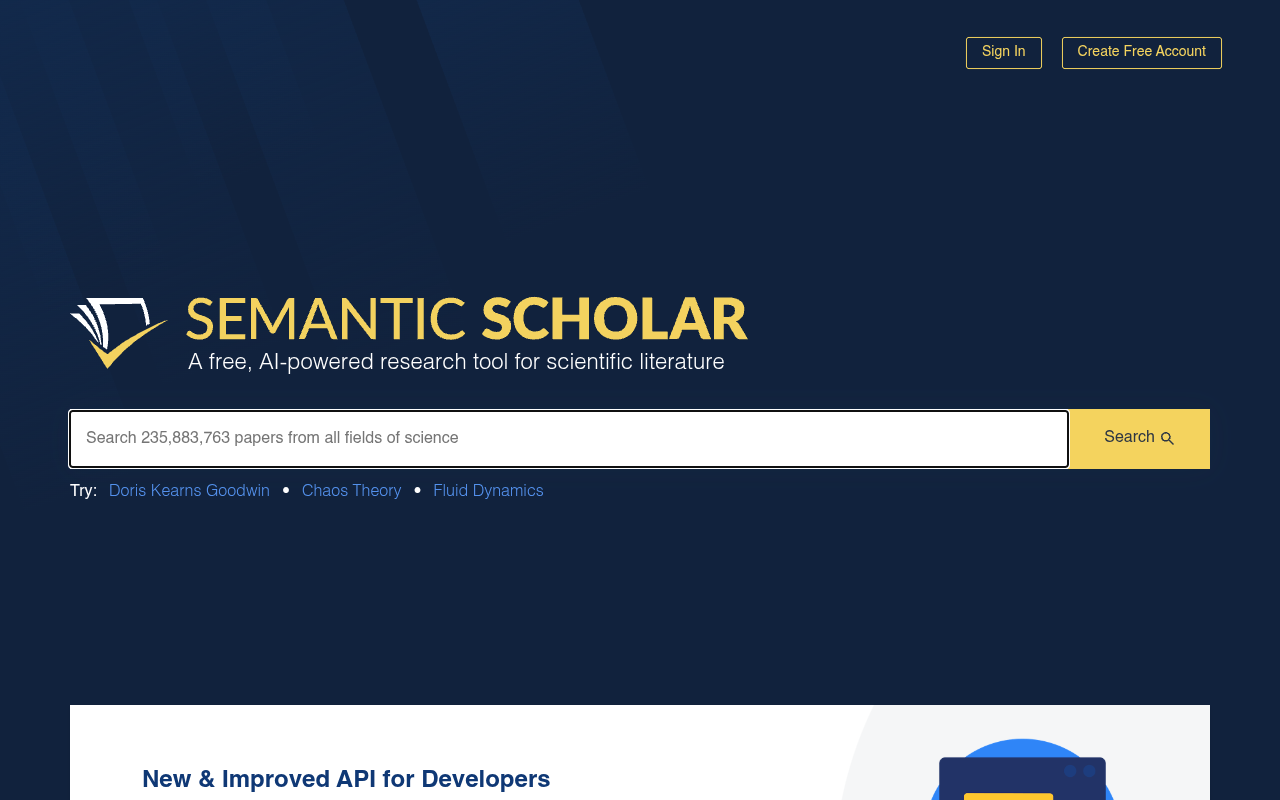
Semantic Scholar is a free AI-powered moteur de recherche for scientific literature that indexes over 235 million papers across all fields of science. It uses machine pour classer results by relevance, track citations, and provide an augmented reading experience through Semantic Reader. Researchers, students, and academics use it to discover papers, follow citation networks, and stay current in their fields.
Semantic Scholar fills a specific niche in the academic search space: it applies modern AI to the problem of finding relevant scientific papers. Launched by the Allen Institute for AI, the tool indexes over 235 million papers from all scientific disciplines. What sets it apart from Google Scholar is its AI-powered relevance ranking, which considers factors beyond raw citation counts. The citation graph feature is particularly useful for tracing how ideas evolve through the literature.
The tool serves a broad academic audience, from undergraduate students writing their first research paper to tenured professors tracking their field's developments. The Semantic Reader beta adds an extra layer of utility by surfacing context while you read, though it currently only works for a subset of papers. For developers, the API opens up possibilities for building custom research tools.
The biggest selling point is the price: it is completely free with no usage limits. There are no premium tiers or paywalls. The tradeoff is that the interface, while clean, lacks some of the advanced search operators and filtering options that power users might expect. For most researchers, however, the combination of scale, AI ranking, and zero cost makes it a valuable addition to their toolkit.
Key Features
Paper Search
Search over 235 million papers with AI-powered relevance ranking
Citation Graph
Visualize how papers reference each other and track influence over time
Semantic Reader
Augmented reading interface with contextual highlights for select papers
Developer API
Build scholarly applications with paper search and stable API endpoints
Influence Metrics
View citation counts and influence scores to gauge a paper's impact
Field Filtering
Narrow results by scientific field or sub-discipline
Pricing FREE
Gratuit
- Full access to search
- Citation graphs
- Semantic Reader beta
- Accès API
- No usage limits
Pros & Cons
Pros
- Completely free with no usage caps or subscription fees
- Indexes over 235 million papers across all scientific fields
- AI relevance ranking surfaces high-impact papers first
- Citation graph makes it easy to trace research influence
- Developer API enables custom scholarly applications
Cons
- Advanced search filters are less intuitive than Google Scholar
- Semantic Reader is still in beta and limited to select papers
- No mobile app for research on the go
Frequently Asked Questions
Is Semantic Scholar really free?
Yes, Semantic Scholar is completely free to use. There are no subscription fees, usage limits, or paywalls. You can search, read, and download papers without any cost.
How many papers does Semantic Scholar index?
Semantic Scholar indexes over 235 million papers from all fields of science. This includes journal articles, conference proceedings, preprints, and other scholarly content.
What is Semantic Reader?
Semantic Reader is an augmented reading interface that provides richer context for select papers. It highlights key figures, citations, and related work while you read. It is currently in beta and only available for certain papers.
Can I build applications using Semantic Scholar data?
Yes, Semantic Scholar offers a developer API with paper search functionality, documentation, and improved stability. Hundreds of developers already use it to build scholarly applications.
How does Semantic Scholar differ from Google Scholar?
Semantic Scholar uses AI to rank papers by relevance and influence, whereas Google Scholar primarily sorts by citation count. Semantic Scholar also offers a citation graph and Semantic Reader for enhanced reading.
Version History
Semantic Scholar launched a new API with improved search capabilities and higher rate limits for academic research access.
Semantic Scholar introduced a redesigned user interface and enhanced paper recommendation features.
Semantic Scholar released an updated citation graph model covering over 200 million papers.
Semantic Scholar made its public API generally available, allowing bulk access to scholarly data.
80 Alternatives to Semantic Scholar

Connected Papers
Visual exploration tool that maps related academic papers using citation...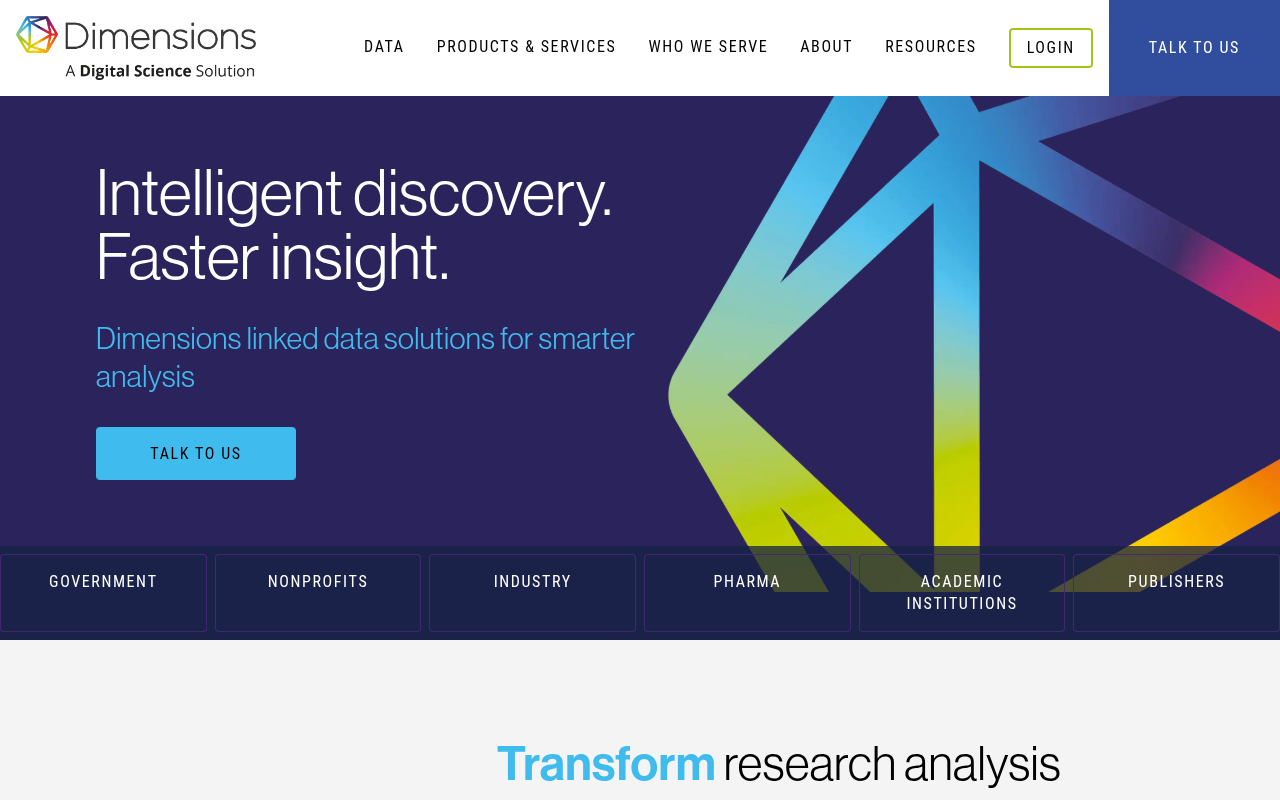
Dimensions
A linked research database for finding and analyzing publications, grants,...
Elicit AI
Revue de littérature et analyse avec assistance IA
EndNote Click
A free browser extension that gives researchers one-click access to...
Iris.ai
An AI knowledge foundation for regulated enterprises that grounds models...
Litmaps
Litmaps visualizes academic papers as interactive citation networks to help...Traffic Data
Traffic sources
Principaux pays
 États-Unis
15.4%
États-Unis
15.4%
 Indonésie
12.9%
Indonésie
12.9%
 Inde
5.6%
Inde
5.6%
 Chine
4.7%
Chine
4.7%
 Allemagne
3.6%
Allemagne
3.6%
Mots-clés principaux
Engagement metrics
User Reviews
Be the first to review Semantic Scholar
Please se connecter to leave a review.