
AEO & Alternatives à Sleep SEO
Optimisation des moteurs de réponse vs SEO traditionnel
Un guide pratique
Answer Engine Optimization focuses on how AI systems retrieve, synthesise, and present information as direct answers, while traditional SEO focuses on how moteurs de recherche crawl, index, and rank pages in results.
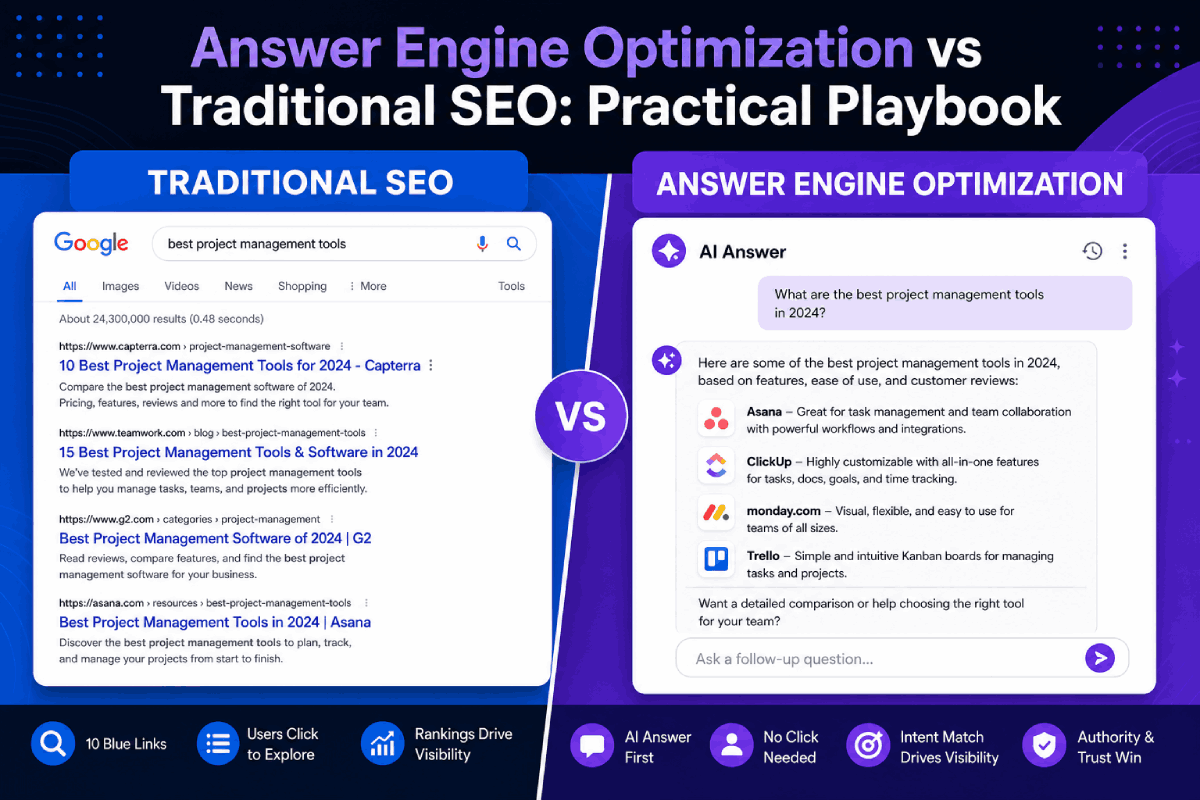
Comment fonctionne le SEO traditionnel
Traditional SEO is built around keywords, pages, and rankings: you research search demand, create content mapped to intent, and optimise on-page elements, technical health, and link profiles to win positions in SERPs.
Le succès se mesure en impressions, taux de clics et sessions organiques.
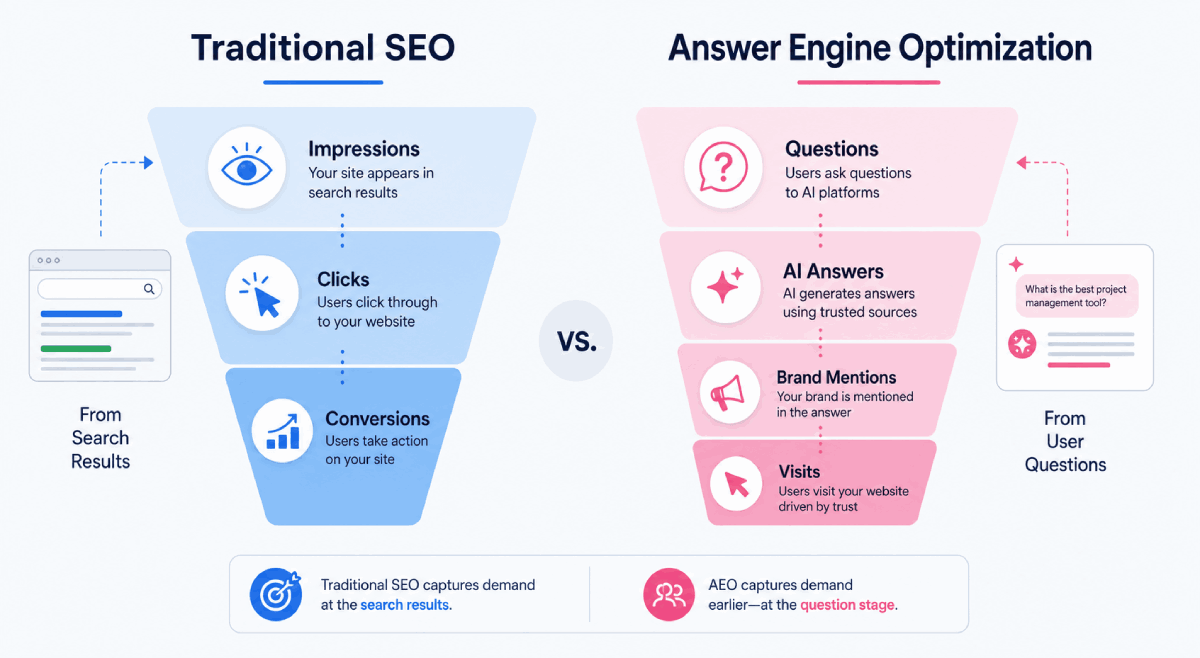
Comment l'optimisation pour les moteurs de réponse diffère
AEO assumes that many users no longer click through to websites for every question; instead, they read answers in AI overviews, chat interfaces, and other zero-click experiences. Rather than optimising a whole page around a keyword, you optimise content chunks around specific questions and entities.
Les signaux évoluent vers la clarté sémantique, la structure en blocs, la fraîcheur et les chemins d'exploration explicites pour les bots IA et les LLM.
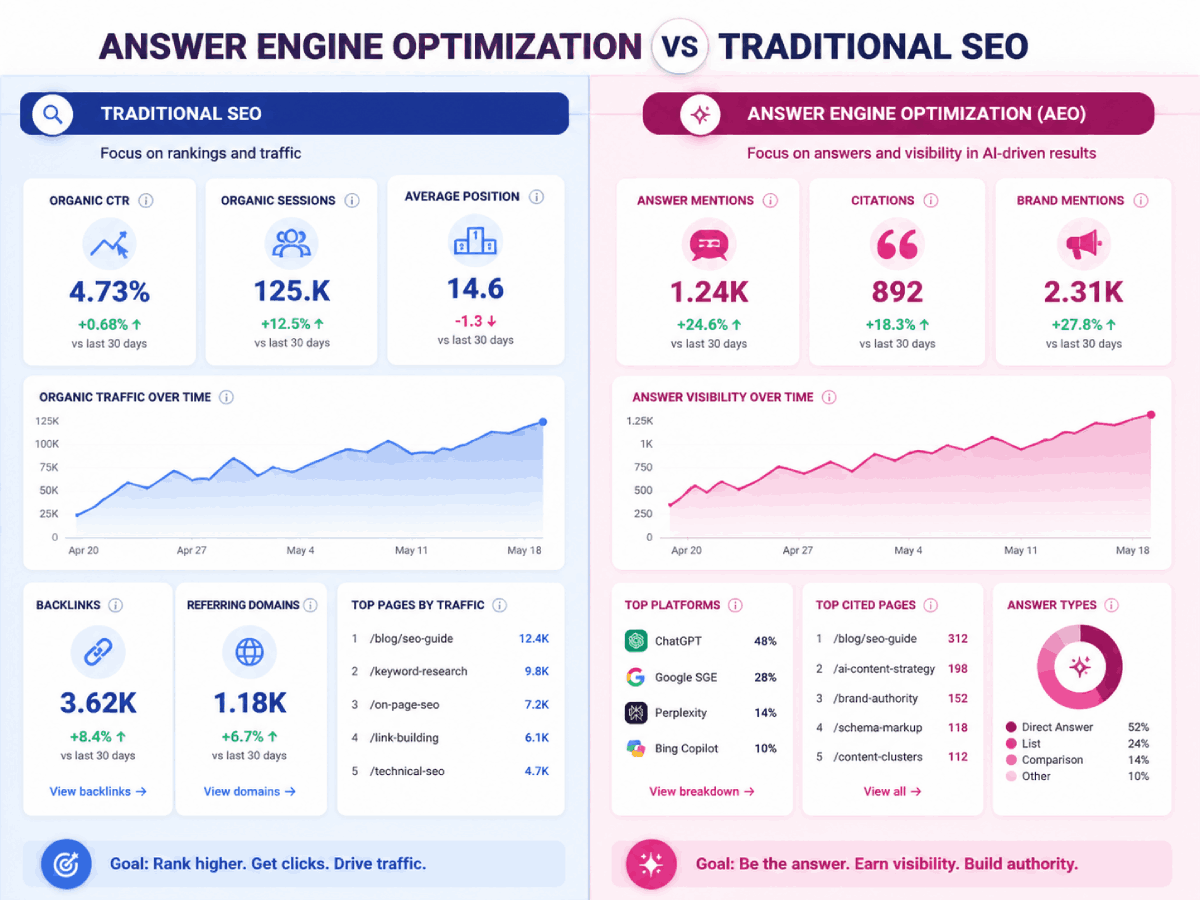
Pourquoi vous avez besoin à la fois d'AEO et de SEO
Informational search is shifting toward agents conversationnels and zero-click SERPs, while transactional and navigational queries still depend heavily on classic search results. A hybrid approach lets you maintain organic traffic where clicks matter and build presence in AI answers where users stay inside the interface.
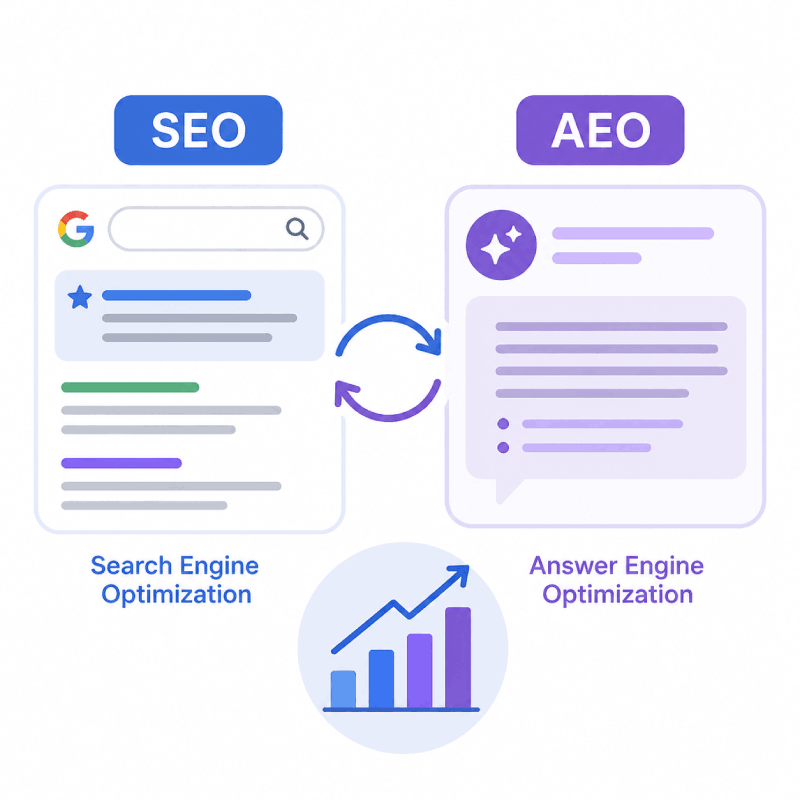
The same page can serve both: a well-structured guide with clear questions and answers can rank in search and be chunked effectively for AI retrieval.
Un guide pratique pour l'AEO + SEO
Start by mapping a question graph for your topic: the core questions users ask, their variants, and follow-ups. Build pillar pages that answer the main questions in depth, then publish supporting posts that focus on individual questions with concise answers and detailed context.
Structure each page with clear headings, short intros, and FAQ sections so AI systems can isolate answerable chunks. Utiliser schema for FAQs and other entities, and keep technical SEO strong so search engines and AI crawlers can ingest content cleanly.
If you want a deeper look at the tools that monitor this shift, the main guide on Outils de suivi de classement LLM est un point de départ utile.
Track citations, prompts, and visibility across AI answer surfaces.
Découvrez le guide principal de suivi du classement LLMQuestions fréquemment posées
L'AEO remplace-t-il le SEO traditionnel ?
Non. L'AEO cible la visibilité dans les réponses et aperçus générés par l'IA, tandis que le SEO traditionnel vise le classement et les clics dans les résultats de recherche classiques. La plupart des sites ont besoin des deux.
Comment savoir si je dois prioriser l’AEO ?
Prioritise AEO when your audience uses outils d'IA heavily for research, when your topics trigger AI overviews, or when zero-click behaviour is increasing for informational queries.
Une seule page peut-elle être optimisée à la fois pour l'AEO et le SEO ?
Oui. Les pages comportant des sections claires de questions-réponses, un bon maillage interne et un référencement technique solide peuvent se classer dans les résultats de recherche et être efficacement segmentées pour la récupération par l'IA.
Quels indicateurs dois-je suivre pour l'AEO ?
Track AI citation share of voice, prompt coverage, branded versus unbranded mentions, and the volume and quality of AI-driven referrals, alongside rankings and traffic.