
¿La IA tomará mi trabajo? Lo que realmente dicen los datos (y lo que puedes hacer)
AI is already changing how we work. The real question is not just whether it will take your job, but how you can make sure it works for you, not against you.

If you have ever caught yourself wondering “Will AI take my job?”, you are not alone. From office workers to creatives and frontline staff, people everywhere are trying to work out whether AI is a threat, an opportunity, or a bit of both.
The honest answer is that AI is much more likely to transformar tu trabajo than to remove it overnight. What happens next depends heavily on the tasks you do, the skills you build, and how quickly you learn to treat AI as a tool rather than a rival.
La respuesta corta: la IA reconfigurará tu trabajo antes de reemplazarlo
Headlines often swing between “AI will steal all our jobs” and “AI will magically create millions of new ones”. The reality sitting in the middle is less dramatic, but far more useful for planning your career.
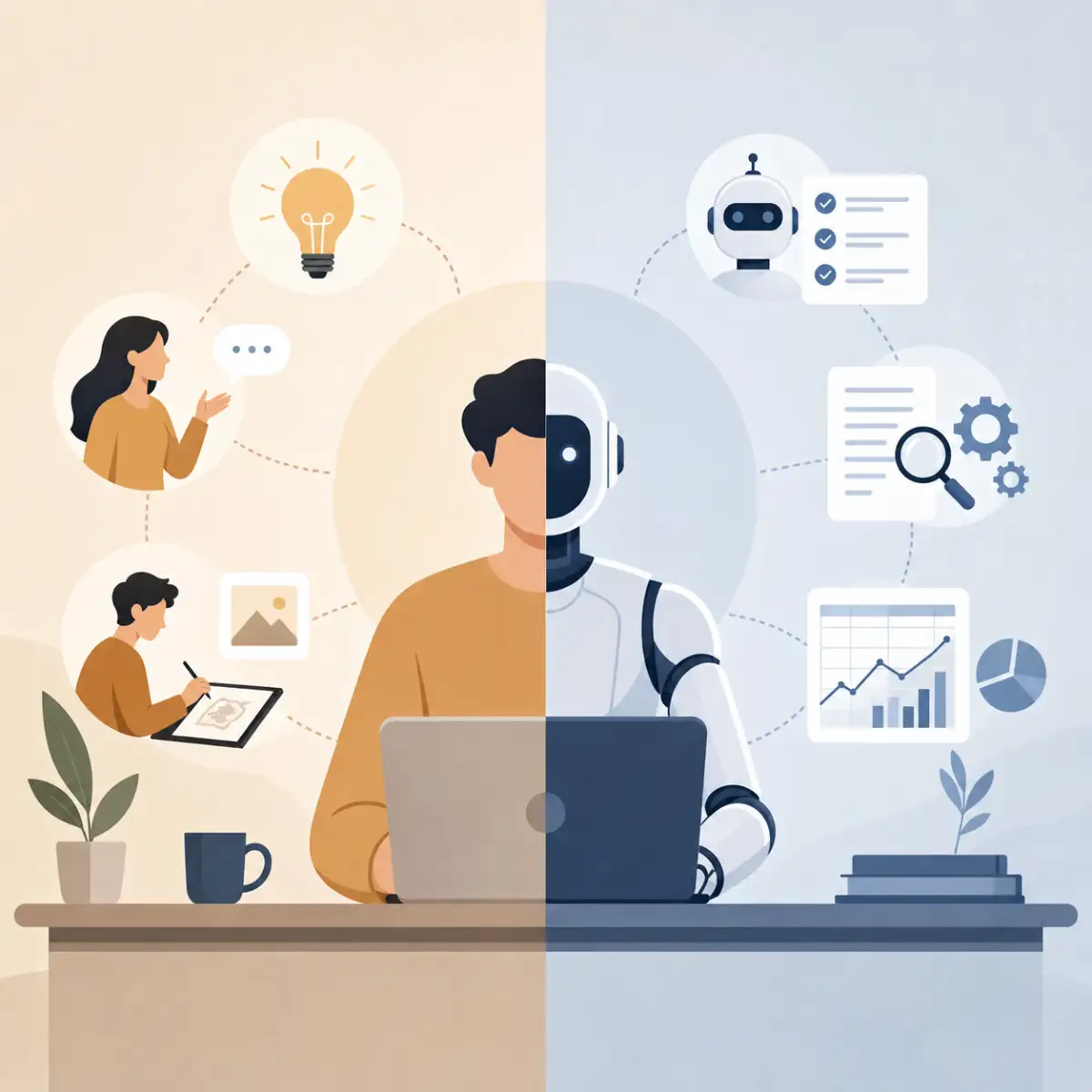
Lo que la gente teme vs lo que realmente está sucediendo
Many forecasts talk about millions of jobs being “affected” by AI, which is easy to read as “millions of jobs disappearing”. In practice, most evidence so far points to jobs being redesigned: certain activities are automated, new responsibilities appear, and job descriptions quietly evolve rather than vanish.
In most companies today, AI is being used to speed up tasks like drafting, summarising, analysing, and answering routine questions, not to remove entire teams in one go.
Automatización de tareas vs eliminación de empleos completos
A job is a bundle of tasks. AI is strong at taking over specific pieces of that bundle: for example, generating a first draft of an email, checking a spreadsheet for anomalies, or answering common help‑centre questions.
Even in roles with high automation potential, there are usually still parts that benefit from human judgment, context, empathy, or physical presence. That is why it is more accurate to say AI automates tasks first, and only sometimes leads to full job replacement.
Por qué tus tareas importan más que tu título laboral
Two people with the same job title can have very different levels of AI exposure. A “marketing manager” who spends their days writing standard reports and basic copy is in a different position from one who spends most of their time on strategy, client conversations, and cross‑team coordination.
When you think about AI and your career, it is much more useful to analyse cuánto de tu día es rutinario, predecible y se realiza en una computadora than it is to worry about the title on your LinkedIn profile.
Lo que dicen los datos sobre la IA y los empleos
Large studies from consultancies, universities, and international organisations are trying to quantify how big the shift might be. The numbers differ, but the patterns are surprisingly consistent.
La escala de la automatización potencial
Across advanced economies, analysts estimate that a significant chunk of current working hours involve tasks that could be automated in whole or in part by AI and related technologies over the next decade or so.
That does not mean those hours simply disappear. It means the way those hours are used will change: less time on repetitive work, more time on tasks that require human judgment, creativity, and interaction — assuming workers and organisations adapt.
Empleos reconfigurados vs empleos reemplazados
A recurring finding is that many more jobs will be reshaped by AI than fully replaced. In other words, AI becomes embedded into job descriptions, tools, and processes rather than acting as a one‑to‑one substitute for a person.
Think of roles like analysts, developers, marketers, and designers: their work can be sped up and extended by AI, but someone still needs to ask the right questions, decide what “good” looks like, and make judgment calls on the results.
Los trabajadores están preocupados y esperanzados al mismo tiempo
Surveys in multiple countries show a majority of workers are worried about AI threatening job security or wages, especially younger and lower‑paid employees. At the same time, workers who already use AI tools day to day often report higher productivity and, in some cases, more interesting work.
The common thread is that people who are given training and agency to shape how AI fits into their role usually feel more positive than those who have automation “done to them” without support.
¿Qué trabajos son los más vulnerables a la IA?
No single list will capture every job that might change, but we can say a lot by looking at the type of work involved.
Los tipos de tareas en las que la IA es buena (y en las que no)
Current AI systems excel at pattern‑based work: generating and transforming text or images, spotting patterns in structured data, and answering questions that match patterns they have seen before.
They struggle with tasks that require deep understanding of messy real‑world context, rich face‑to‑face interaction, physical dexterity in unpredictable environments, or long‑term responsibility for outcomes.
Roles con mayor riesgo de automatización
Jobs where a large share of the work is routine and digital are closer to the “high risk” end of the spectrum. Examples include basic data entry, some forms of office administration, repetitive al cliente mejorado, and pure production roles in content or code that primarily stitch together predictable patterns.
These roles are often the first to see hiring slowdowns, shrinking entry‑level positions, or redesigned workflows built around AI tools.
Roles más propensos a ser aumentados que reemplazados
Many professional roles — engineering, marketing, product, design, consulting, finance, law, healthcare, education — are better thought of as aumentado por IA. In these jobs, AI can do early drafts, quick analysis, and routine follow‑up, but humans still own client relationships, strategy, trade‑offs, and accountability.
In practice, this often means being able to deliver more work, at higher quality, in the same amount of time.
Trabajos que son relativamente resistentes (por ahora)
Work that is built around in‑person care, complex dinámicas sociales, or messy physical environments is harder to automate. Think of nurses, carers, therapists, tradespeople, hospitality workers, and many leadership roles.
That does not mean these jobs will never be touched by AI, but the near‑term impact is more about tools that support planning, scheduling, or diagnostics than direct replacement.
Cómo saber si tu trabajo está en riesgo
Rather than guessing, you can run a simple task‑based audit of your own role. This gives you a clearer, less emotional view of where you stand.
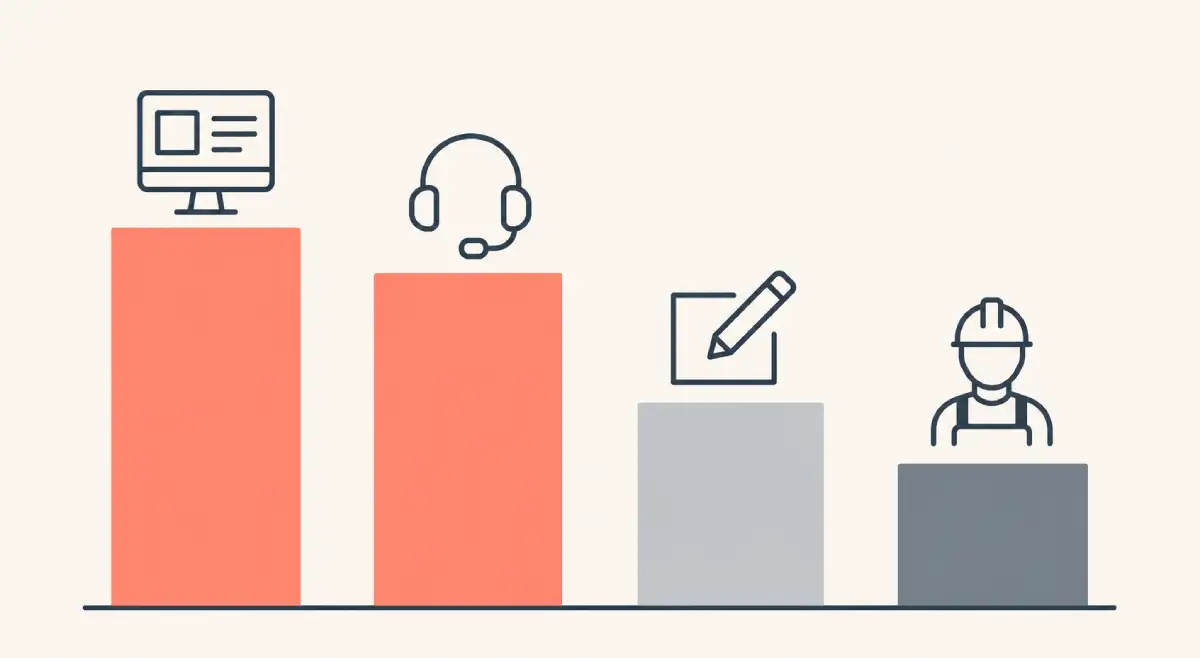
Una lista de verificación simple de riesgos basada en tareas
Grab a sheet of paper and list the main activities you do in a typical week. For each one, ask:
- ¿Esta tarea es mayormente rutinaria y repetitiva, o cambia mucho de una situación a otra?
- ¿Se realiza completamente en una computadora, o involucra personas, lugares o cosas físicas?
- ¿Requiere un juicio profundo en el dominio, o "ser lo suficientemente bueno" suele ser suficiente?
- ¿Alguien sin contexto sobre mi empresa podría hacer esto de manera realista con un buen conjunto de instrucciones?
- ¿Ya existen herramientas de IA en el mercado que hagan algo muy similar?
Tasks that score “routine, digital, low‑judgment” across the board are more likely to be automated or heavily assisted by AI over time.
Señala que tu rol podría ser remodelado pronto
Beyond your own checklist, pay attention to what is happening around you. Early signs include new AI tools being trialled in your team, managers talking about efficiency targets, or early experiments in automating specific workflows.
None of these are cause for panic on their own, but together they are a strong signal to get ahead of the change rather than waiting for it.
Por qué los roles de nivel inicial sienten esto primero
Many jobs are built like a pyramid, with more junior staff handling the most repetitive tasks. When AI comes in, it often targets those tasks first, which can reduce the number of traditional entry‑level positions.
That is one reason early‑career workers in office and creative roles are feeling the shift more sharply and need to be especially proactive about learning AI‑related skills.
¿La IA te quitará tu trabajo? Usa la IA como un copiloto profesional en su lugar
The people who benefit most from AI are not the ones who ignore it, but the ones who learn to use it as leverage. In almost every field, there is room to become “the person who knows how to get the most out of these tools”.
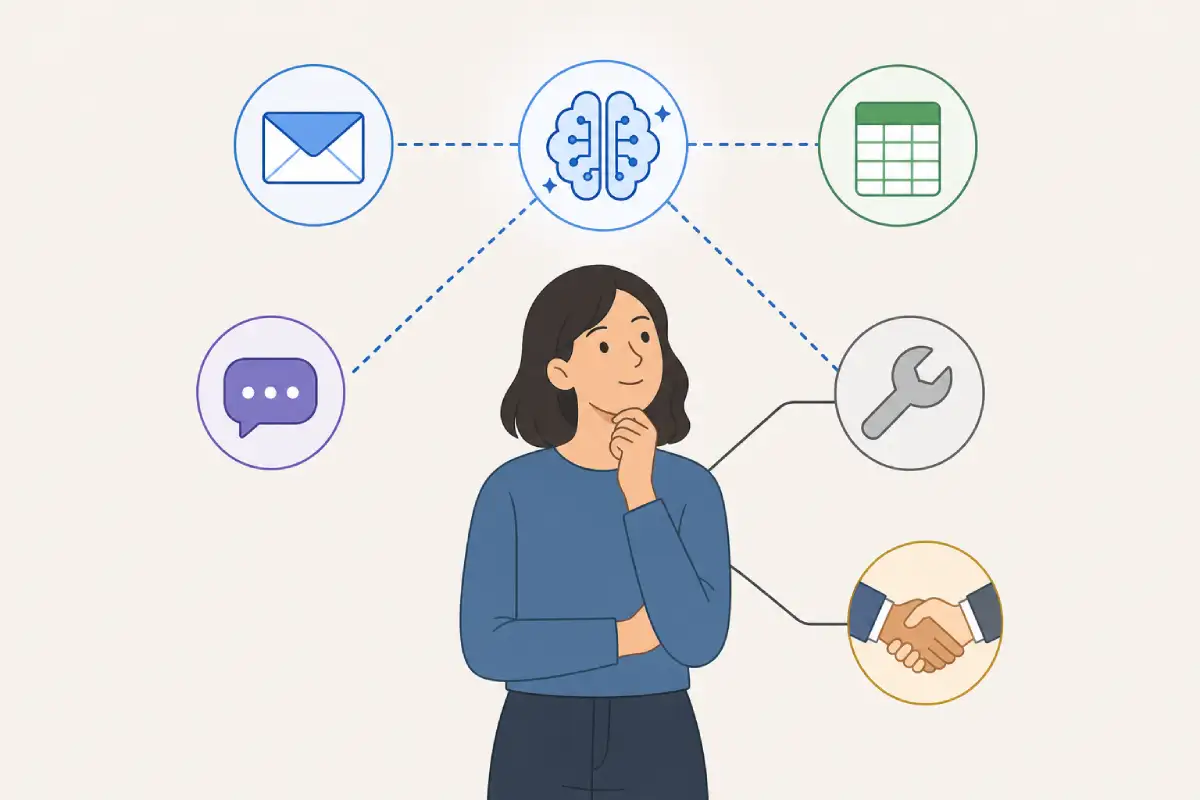
Aprende a usar la IA como una herramienta poderosa, no como una rival
Start by weaving AI into your daily work in small, safe ways: drafting rough emails, summarising long documents, generating ideas, or exploring alternative approaches to a problem.
The more fluently you can combine your expertise with AI’s speed and pattern‑matching, the harder it becomes to replace you with someone who does not have that combination.
Reforzar las habilidades humanas con las que la IA tiene dificultades
As AI takes over narrow, repeatable tasks, human strengths become more valuable, not less. Skills like communication, negotiation, leadership, creative thinking, and cross‑functional collaboration are difficult to automate and crucial for complex work.
Investing in these abilities makes you more resilient across industries, even as the specific tools you use change.
Desarrolla habilidades digitales y de datos complementarias
You do not need to become a machine‑learning engineer to stay relevant. But it is increasingly important to be comfortable with data, automation, and AI‑powered tools in your domain.
Over time, aim to move from “I can click the buttons” to “I understand how to frame problems, choose tools, and sanity‑check the outputs”.
Preparando tu carrera para el futuro en la era de la IA
A sensible goal is not to make yourself “AI‑proof” forever, but to build a career that can absorb and even benefit from new waves of technology.
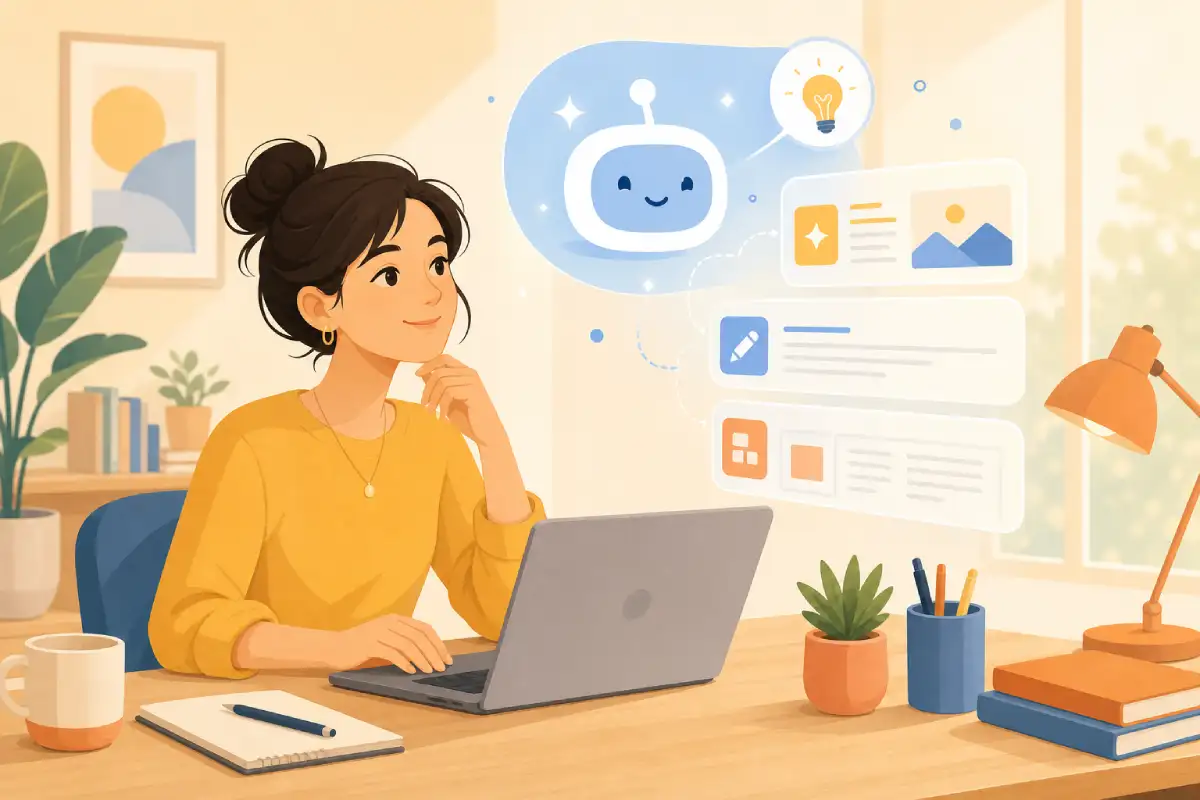
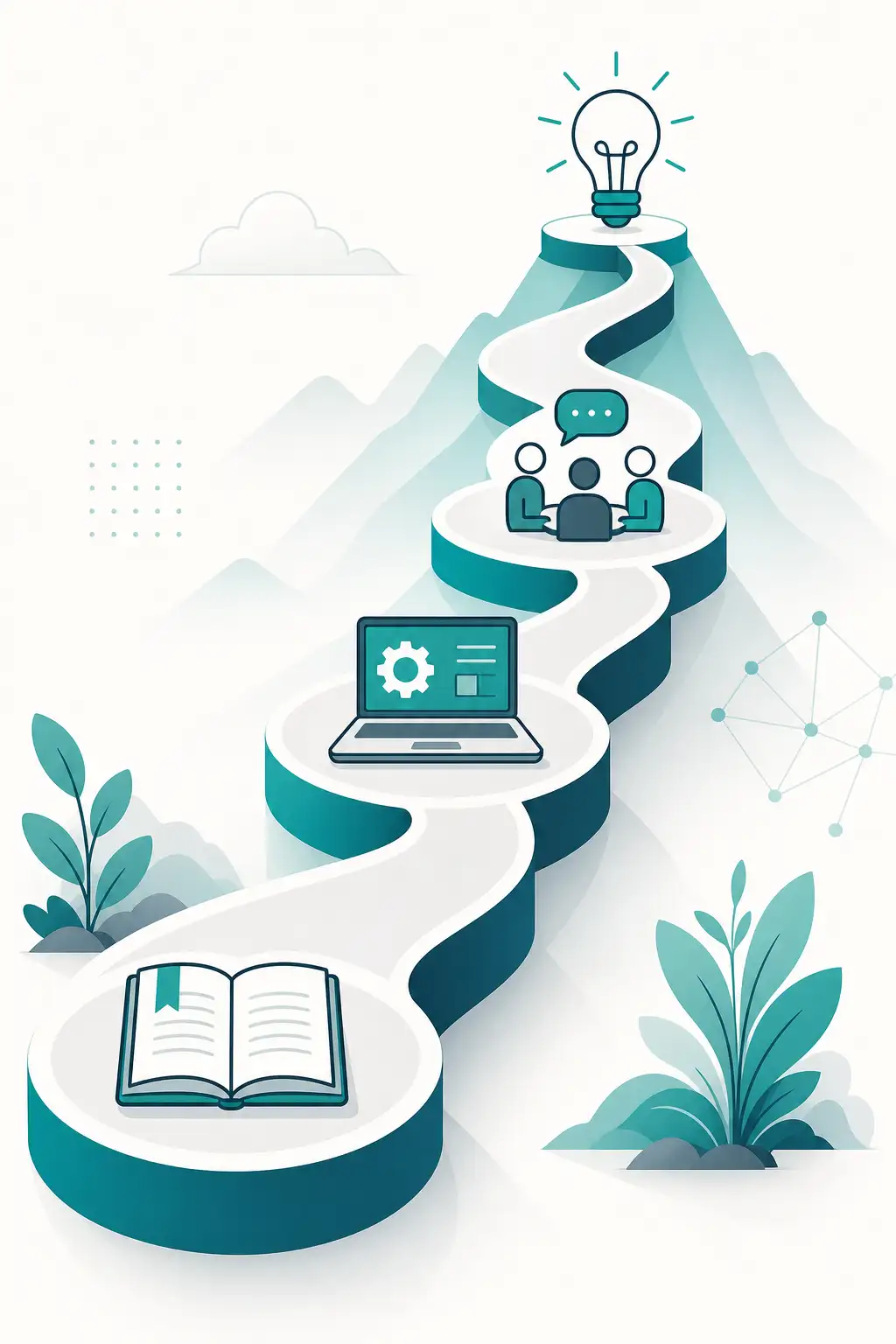
Una hoja de ruta de mejora de habilidades de 3 a 5 años
One way to think about the next few years is in phases. In year one, aim to become comfortable with the main AI tools in your field and use them weekly. In years two and three, deepen core skills that AI amplifies: experiencia en el dominio, data literacy, and problem‑solving.
Beyond that, look for chances to move into roles that involve shaping how AI is used — leading projects, mentoring others, or helping design new workflows.
Elegir sectores y roles con demanda saludable
Some sectors are likely to see strong demand even as AI spreads: healthcare, education, green technologies, infrastructure, specialised professional services, and many parts of the public sector.
If you are considering a career move, it can be worth favouring fields where AI is clearly a tool for scaling human work rather than a near‑term replacement.
Usar proyectos paralelos y portafolios para mantener la empleabilidad
Small, real projects are one of the best ways to prove you can work effectively with AI. That might mean building a simple automation for your team, publishing case studies about using AI in your niche, or contributing to internal knowledge bases.
Over time, this becomes a portfolio that signals “I adapt quickly and make new tools useful” — exactly what employers are looking for in uncertain times.
Lo que hacen los empleadores y los gobiernos (y por qué te importa)
You are not solely responsible for navigating these changes. Organisations and policymakers are also trying to manage the shift in a way that keeps people employable and economies stable.
Cómo las empresas líderes están rediseñando los trabajos para la IA
Many organisations are moving away from one‑off automation projects and towards ongoing “job redesign”: mapping out tasks, deciding which are best handled by AI, and reshaping roles to focus humans on higher‑value activities.
In the best cases, this comes with structured training, transparent communication, and new career paths instead of surprise redundancies.
Capacitación, redes de seguridad y respuestas políticas
Governments and institutions are experimenting with public training programmes, incentives for company‑led reskilling, and updates to labour rules as AI adoption grows.
While policies will differ by country, the direction of travel is clear: more focus on aprendizaje permanente, stronger support for career transitions, and closer monitoring of how AI affects different groups of workers.
De “¿La IA me quitará el trabajo?” a “¿Cómo puedo usar la IA en mi trabajo?”
You cannot control every decision your employer or government makes. But you have more influence than you might think over how AI shows up in your own career.
El cambio de mentalidad que lo cambia todo
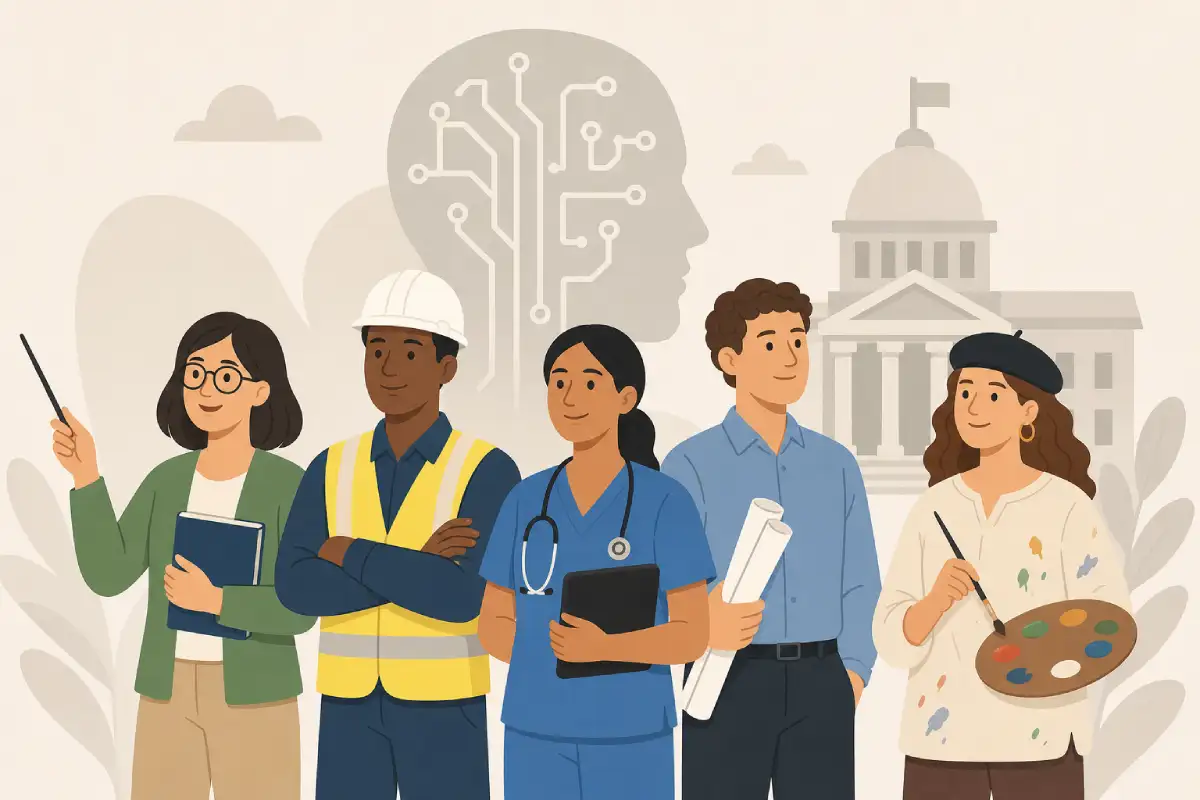
Instead of stopping at “Will AI take my job?”, a more useful question is “How can I become the person who knows how to get the most out of AI in my field?”. That mindset moves you from passive worry to active positioning.
The people who thrive in this transition will not be the ones who ignore AI, but the ones who keep learning, stay curious, and combine human strengths with machine capabilities.
Un plan de acción simple que puedes comenzar este mes
List what you actually do each week and mark which tasks are routine and digital. This shows you where AI is most likely to land first.
Choose a reputable tool in your field and use it for small, low‑risk tasks each day until it feels natural.
Commit to improving a core skill such as communication, client management, or problem‑solving that AI cannot easily copy.
Ask how AI is being used or planned in your team, and volunteer to help test or shape new workflows rather than waiting on the sidelines.
You do not need to predict the future perfectly to navigate it well. If you keep learning, stay close to where AI is actually being used, and actively look for ways to combine your strengths with new tools, you put yourself in a far better position than simply hoping your job will be spared.