
La guía del creador para eliminar música del contenido de video
The creator economy has exploded, but so have the legal landmines. Every day, millions of videos get uploaded with copyrighted music, often unintentionally. A restaurant’s background playlist, a car radio, or even a street musician can turn your masterpiece into a liability. That’s why learning to remove music from video content isn’t just a technical skill – it’s essential self-defense for anyone serious about creación de contenido.
La nueva realidad de la vigilancia en plataformas de video
Plataforma algorithms have become ruthlessly efficient at detecting copyrighted content. YouTube’s Content ID system scans over 100 hours of video uploaded every minute, flagging potential violations in real-time. TikTok’s detection goes deeper, analyzing not just obvious music but ambient audio that might contain copyrighted elements. Instagram and Facebook have joined this arms race, making it nearly impossible to slip past their automated gatekeepers.
The financial stakes keep rising. Beyond immediate takedowns, creators face demonetization, channel strikes, and permanent bans. For businesses using video marketing, the risks extend to legal action from rights holders who view unauthorized use as lost licensing revenue. Even educational institutions and non-profits aren’t immune – fair use defenses are expensive to mount and uncertain to win.
Content reuse presents another layer of complexity. A single video might need multiple versions: one for YouTube with licensed music, another for LinkedIn without any background audio, and a third for internal training with completely different sound design. Music remover from tecnología de video has become essential infrastructure for content creators who need flexibility in how they distribute their work.
El economics are compelling. Professional music licensing can cost hundreds or thousands of dollars per track, while a single copyright strike can cost months of lost revenue. The ability to cleanly remove music from video content provides both creative freedom and financial protection.
De Imposible a Sin Esfuerzo: La Revolución Técnica del Eliminador de Música
Los enfoques tradicionales dependían del filtrado por frecuencia, básicamente adivinando qué partes del espectro de audio contenían música versus diálogo. Los resultados eran consistentemente decepcionantes: las voces sonaban huecas, el audio importante se perdía y los artefactos hacían que el producto final fuera inutilizable.
Aprendizaje automático changed everything. Modern video music remover algorithms use neural networks trained on massive datasets of isolated audio sources. They can identify the difference between a human voice and a violin, between natural speech patterns and synthesized instruments.
Processing speed has improved dramatically. Cloud-based solutions can analyze and process hour-long videos in minutes, while local processing on modern hardware handles most content in real-time. Mobile apps now offer capabilities that required professional studios just a few years ago.
Las mejoras en calidad son igualmente impresionantes.Limpiador de Voz AI Gratis en Línea preserves audio fidelity while achieving clean separation between desired and unwanted elements. The artificial artifacts that plagued earlier solutions have largely disappeared, replaced by natural-sounding results that maintain the original content’s professional quality.
Navegando por el panorama de herramientas para eliminar música de videos
The market has exploded with options, from simple mobile apps to enterprise-grade software solutions. Quality remains the primary differentiator, but defining quality requires understanding your specific needs and constraints.
Processing capabilities vary significantly. Some tools excel at simple background music removal but struggle with complex audio mixes. Others handle orchestral soundtracks beautifully but may over-process simple dialogue. The best music remover from video solutions offer adjustable processing parameters que te permite optimizar resultados para tu tipo de contenido.
El soporte para formatos de archivo importa más de lo que la mayoría de los creadores piensa. Diferentes plataformas prefieren diferentes códecs de video, tasas de bits de audio y configuraciones de resolución. Los flujos de trabajo profesionales a menudo requieren formatos de salida específicos para procesamiento posterior. Busca herramientas que soporten toda tu cadena de producción sin necesidad de pasos adicionales de conversión.
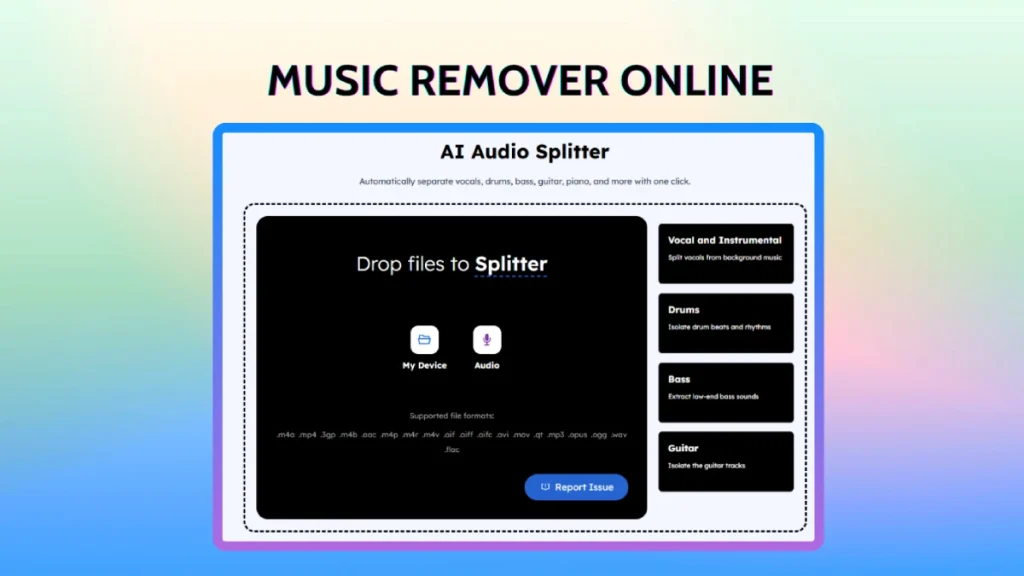
The pricing landscape includes everything from premium professional software to excellent Limpiador de Audio AI Gratis en Línea solutions like AudioCleaner that deliver surprisingly sophisticated results. Many creators find that free tools handle their needs perfectly, especially for social media content and basic video editing. These solutions often leverage the same underlying AI technology as expensive alternatives, democratizing professional-quality procesamiento de audio.
Aplicaciones en el mundo real en diferentes tipos de contenido
Social media creators face unique challenges with background audio. Lifestyle videos filmed in public spaces, travel content recorded in restaurants or cafes, and street interviews often capture unwanted background music. The ability to quickly remove music from video content means faster publishing horarios y reducción del riesgo de derechos de autor.
Corporativo producción de video has embraced these tools for compliance and flexibility. Training videos, product demonstrations, and conference recordings often contain background music that creates licensing complications. Professional teams use video music remover technology to create clean versions suitable for different distribution contexts.
Los creadores de contenido educativo enfrentan problemas similares. Conferencias universitarias grabadas en áreas comunes, materiales de cursos en línea filmados en casa y tutoriales creados en espacios compartidos a menudo incluyen audio de fondo que distrae del mensaje educativo. El audio limpio mejora los resultados de aprendizaje y la presentación profesional.
La transmisión en vivo y la grabación de eventos presentan desafíos especiales. Conferencias, seminarios web y actuaciones en vivo a menudo incluyen música protegida por derechos durante descansos o transiciones. El procesamiento posterior para eliminar música de grabaciones de video permite una distribución más amplia y un uso archivístico sin preocupaciones de licencias.
El mundo del podcasting ha adoptado cada vez más los formatos de video, creando nuevas necesidades de procesamiento de audio. Los podcasts en video grabados en espacios públicos o entornos de coworking a menudo requieren eliminar música de fondo para una presentación profesional y cumplimiento en plataformas.
Conclusión
Para los creadores que construyen negocios sostenibles en torno al contenido de video, dominar la capacidad de eliminar música del contenido proporciona tanto libertad creativa como protección legal. A medida que las plataformas se vuelven más agresivas en la aplicación de derechos de autor y las audiencias más exigentes con la calidad del audio, estas habilidades pasan de ser útiles a ser esenciales para el éxito a largo plazo.