
Der Leitfaden für Creator zum Entfernen von Musik aus Videoinhalten
The creator economy has exploded, but so have the legal landmines. Every day, millions of videos get uploaded with copyrighted music, often unintentionally. A restaurant’s background playlist, a car radio, or even a street musician can turn your masterpiece into a liability. That’s why learning to remove music from video content isn’t just a technical skill – it’s essential self-defense for anyone serious about Content-Erstellung.
Die neue Realität der Überwachung von Videoplattformen
Plattform algorithms have become ruthlessly efficient at detecting copyrighted content. YouTube’s Content ID system scans over 100 hours of video uploaded every minute, flagging potential violations in real-time. TikTok’s detection goes deeper, analyzing not just obvious music but ambient audio that might contain copyrighted elements. Instagram and Facebook have joined this arms race, making it nearly impossible to slip past their automated gatekeepers.
The financial stakes keep rising. Beyond immediate takedowns, creators face demonetization, channel strikes, and permanent bans. For businesses using video marketing, the risks extend to legal action from rights holders who view unauthorized use as lost licensing revenue. Even educational institutions and non-profits aren’t immune – fair use defenses are expensive to mount and uncertain to win.
Content reuse presents another layer of complexity. A single video might need multiple versions: one for YouTube with licensed music, another for LinkedIn without any background audio, and a third for internal training with completely different sound design. Music remover from Videotechnologie has become essential infrastructure for content creators who need flexibility in how they distribute their work.
Das economics are compelling. Professional music licensing can cost hundreds or thousands of dollars per track, while a single copyright strike can cost months of lost revenue. The ability to cleanly remove music from video content provides both creative freedom and financial protection.
Vom Unmöglichen zum Mühelosen: Die technische Revolution beim Musik-Entferner
Traditionelle Ansätze basierten auf Frequenzfiltern – im Wesentlichen Vermutungen, welche Teile des Audiospektrums Musik versus Dialog enthalten. Die Ergebnisse waren durchweg enttäuschend: Stimmen klangen hohl, wichtige Audios gingen verloren, und Artefakte machten das Endprodukt unbrauchbar.
Maschinelles Lernen changed everything. Modern video music remover algorithms use neural networks trained on massive datasets of isolated audio sources. They can identify the difference between a human voice and a violin, between natural speech patterns and synthesized instruments.
Processing speed has improved dramatically. Cloud-based solutions can analyze and process hour-long videos in minutes, while local processing on modern hardware handles most content in real-time. Mobile apps now offer capabilities that required professional studios just a few years ago.
Die Qualitätsverbesserungen sind ebenso beeindruckend.Sprachreiniger KI Kostenlos Online preserves audio fidelity while achieving clean separation between desired and unwanted elements. The artificial artifacts that plagued earlier solutions have largely disappeared, replaced by natural-sounding results that maintain the original content’s professional quality.
Überblick über die Landschaft der Tools zum Entfernen von Musik aus Videos
The market has exploded with options, from simple mobile apps to enterprise-grade software solutions. Quality remains the primary differentiator, but defining quality requires understanding your specific needs and constraints.
Processing capabilities vary significantly. Some tools excel at simple background music removal but struggle with complex audio mixes. Others handle orchestral soundtracks beautifully but may over-process simple dialogue. The best music remover from video solutions offer adjustable processing parameters die es dir ermöglichen, Ergebnisse für deinen Content-Typ zu optimieren.
Die Unterstützung verschiedener Dateiformate ist wichtiger, als die meisten Creator erkennen. Verschiedene Plattformen bevorzugen unterschiedliche Video-Codecs, Audio-Bitrate und Auflösungseinstellungen. Professionelle Workflows erfordern oft bestimmte Ausgabeformate für die nachgelagerte Verarbeitung. Suchen Sie nach Tools, die Ihren gesamten Produktionsprozess unterstützen, ohne zusätzliche Konvertierungsschritte.
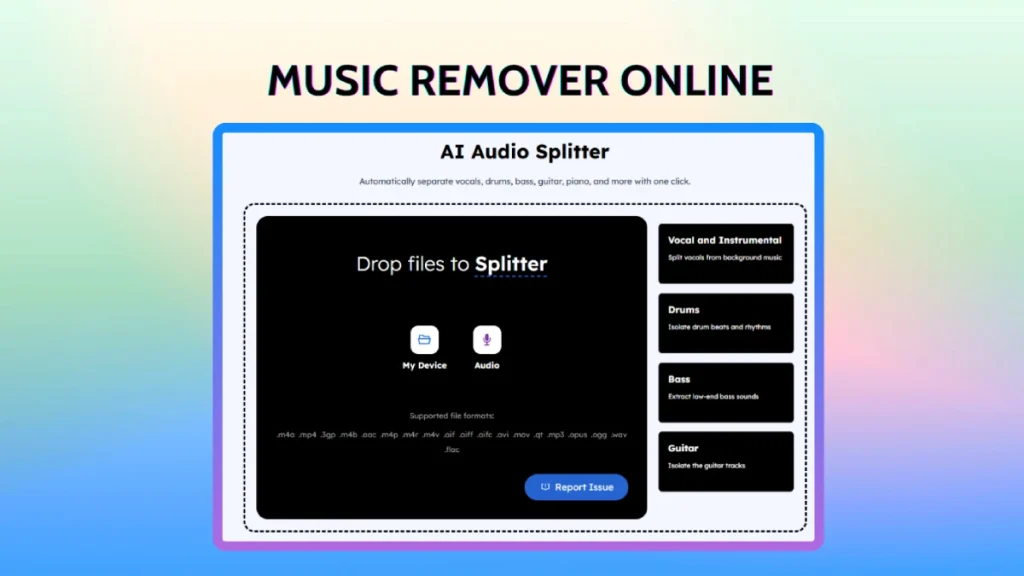
The pricing landscape includes everything from premium professional software to excellent Kostenloser AI-Audio-Cleaner Online solutions like AudioCleaner that deliver surprisingly sophisticated results. Many creators find that free tools handle their needs perfectly, especially for social media content and basic video editing. These solutions often leverage the same underlying AI technology as expensive alternatives, democratizing professional-quality Audiobearbeitung.
Anwendungsbeispiele in verschiedenen Content-Typen
Social media creators face unique challenges with background audio. Lifestyle videos filmed in public spaces, travel content recorded in restaurants or cafes, and street interviews often capture unwanted background music. The ability to quickly remove music from video content means faster publishing Zeitpläne und reduziertes Urheberrechtsrisiko.
Unternehmen Videoproduktion has embraced these tools for compliance and flexibility. Training videos, product demonstrations, and conference recordings often contain background music that creates licensing complications. Professional teams use video music remover technology to create clean versions suitable for different distribution contexts.
Inhalte für die Bildung stehen vor ähnlichen Herausforderungen. Universitätsvorlesungen, die in Gemeinschaftsräumen aufgenommen wurden, Online-Kursmaterialien, die zu Hause gefilmt wurden, und Tutorial-Videos in Gemeinschaftsräumen enthalten oft Hintergrundaudio, das von der Bildungsbotschaft ablenkt. Sauberes Audio verbessert die Lernergebnisse und die professionelle Präsentation.
Livestreams und Veranstaltungsaufzeichnungen stellen besondere Herausforderungen dar. Konferenzen, Webinare und Live-Auftritte enthalten oft urheberrechtlich geschützte Musik während Pausen oder Übergängen. Die Nachbearbeitung, um Musik aus Videoaufnahmen zu entfernen, ermöglicht eine breitere Verbreitung und Archivierung ohne Lizenzprobleme.
Die Podcast-Welt hat zunehmend Videoformate übernommen, was neue Anforderungen an die Audioverarbeitung schafft. Videopodcasts, die in öffentlichen Räumen oder Co-Working-Umgebungen gedreht wurden, erfordern oft das Entfernen von Hintergrundmusik für eine professionelle Präsentation und Plattformkonformität.
Fazit
Für Creator, die nachhaltige Geschäfte rund um Videoinhalte aufbauen, ist das Beherrschen des Entfernens von Musik aus Videos sowohl kreative Freiheit als auch rechtlicher Schutz. Da Plattformen immer aggressiver bei der Durchsetzung von Urheberrechten werden und das Publikum höhere Ansprüche an die Audioqualität stellt, werden diese Fähigkeiten von hilfreich zu unerlässlich für den langfristigen Erfolg.