
AEO & SEO
Answer Engine Optimization vs. traditionelle SEO
Ein praktisches Playbook
Answer Engine Optimization focuses on how AI systems retrieve, synthesise, and present information as direct answers, while traditional SEO focuses on how Suchmaschinen crawl, index, and rank pages in results.
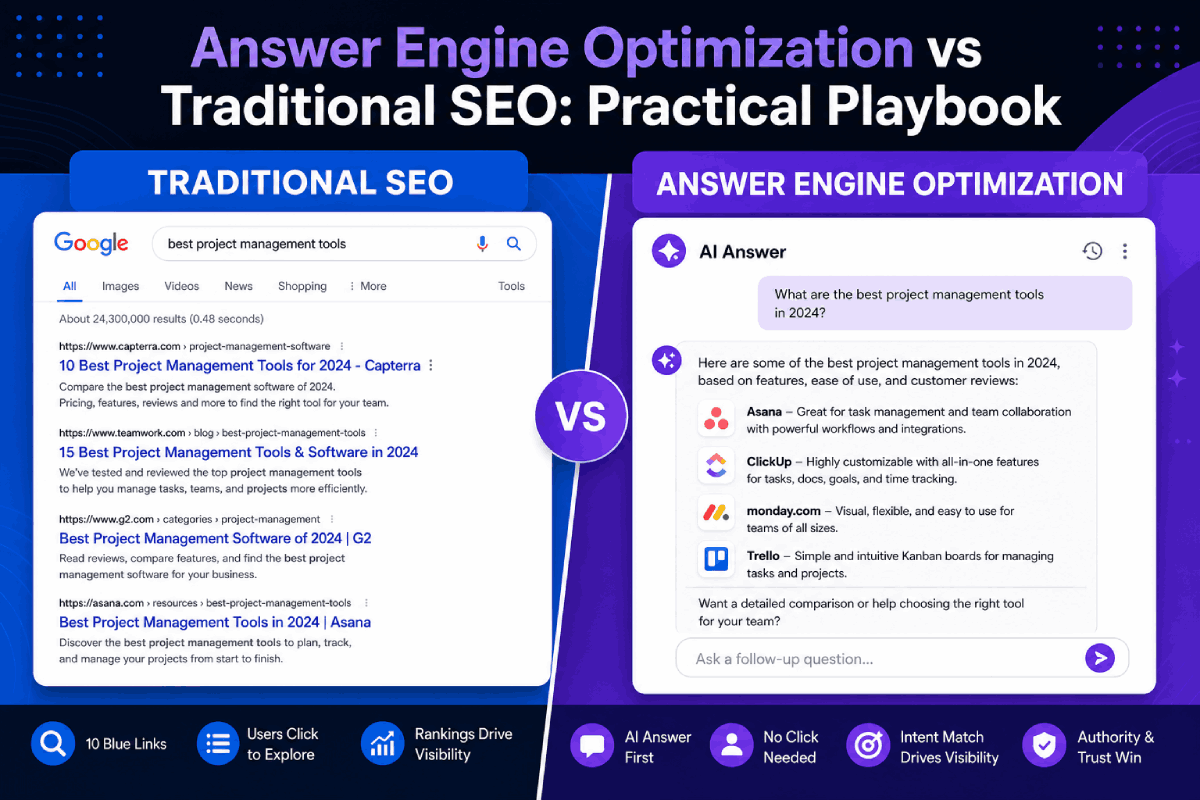
Wie traditionelle SEO funktioniert
Traditional SEO is built around keywords, pages, and rankings: you research search demand, create content mapped to intent, and optimise on-page elements, technical health, and link profiles to win positions in SERPs.
Erfolg wird in Impressionen, Klickraten und organischen Sitzungen gemessen.
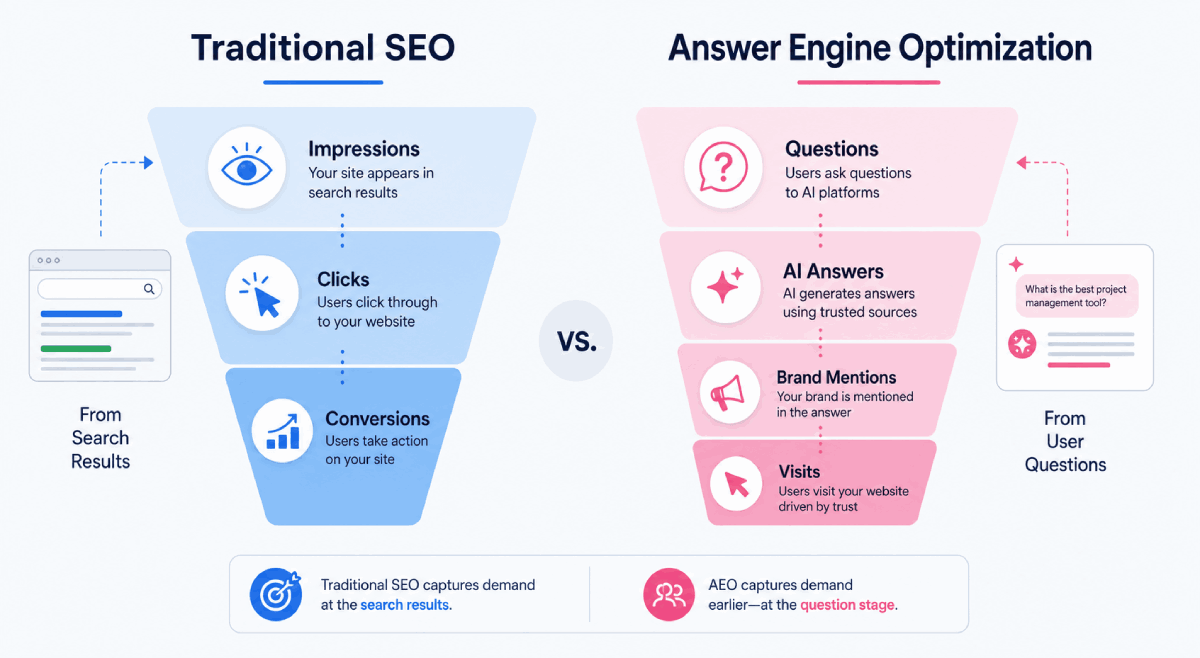
Wie sich Answer Engine Optimization unterscheidet
AEO assumes that many users no longer click through to websites for every question; instead, they read answers in AI overviews, chat interfaces, and other zero-click experiences. Rather than optimising a whole page around a keyword, you optimise content chunks around specific questions and entities.
Signale verschieben sich hin zu semantischer Klarheit, Chunk-Struktur, Aktualität und expliziten Crawl-Pfaden für KI-Bots und LLMs.
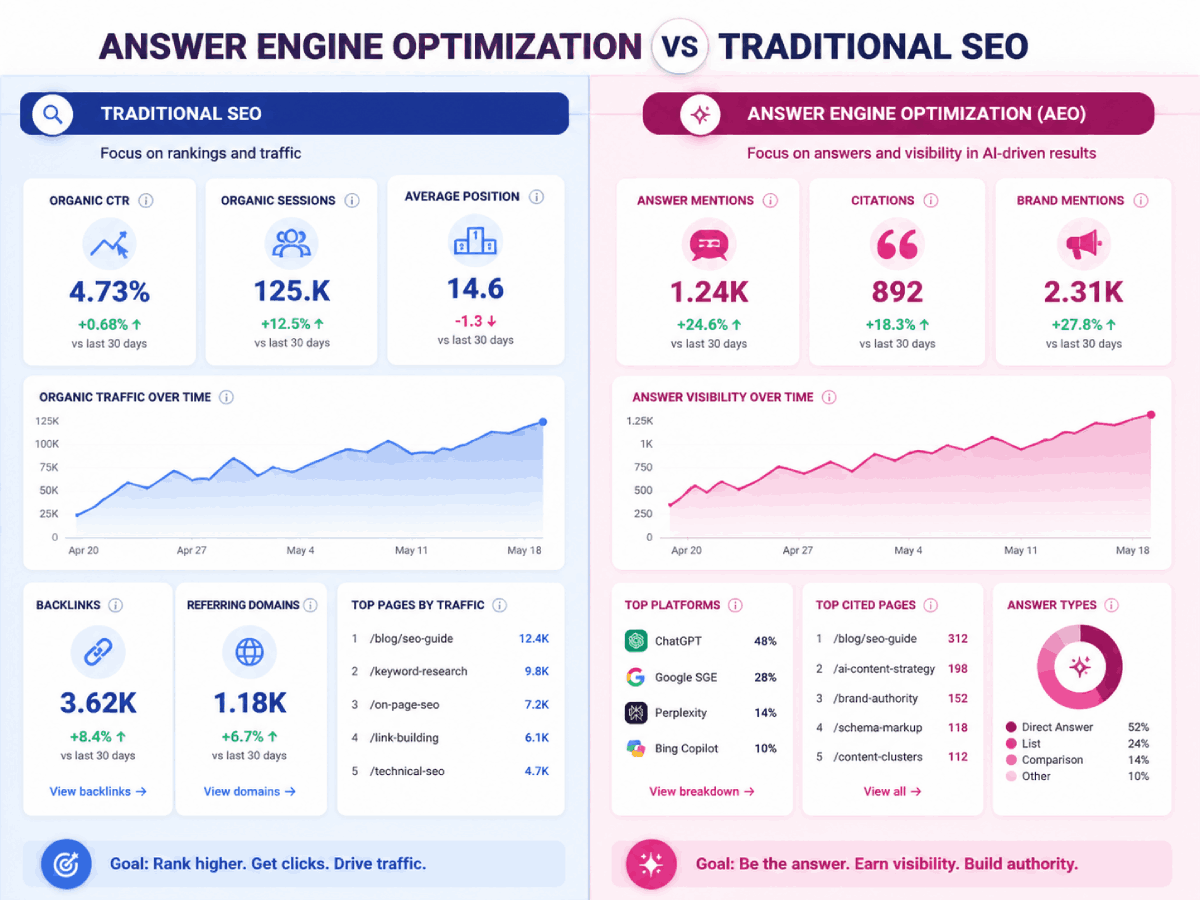
Warum Sie sowohl AEO als auch SEO benötigen
Informational search is shifting toward dialogfähigen Agenten and zero-click SERPs, while transactional and navigational queries still depend heavily on classic search results. A hybrid approach lets you maintain organic traffic where clicks matter and build presence in AI answers where users stay inside the interface.
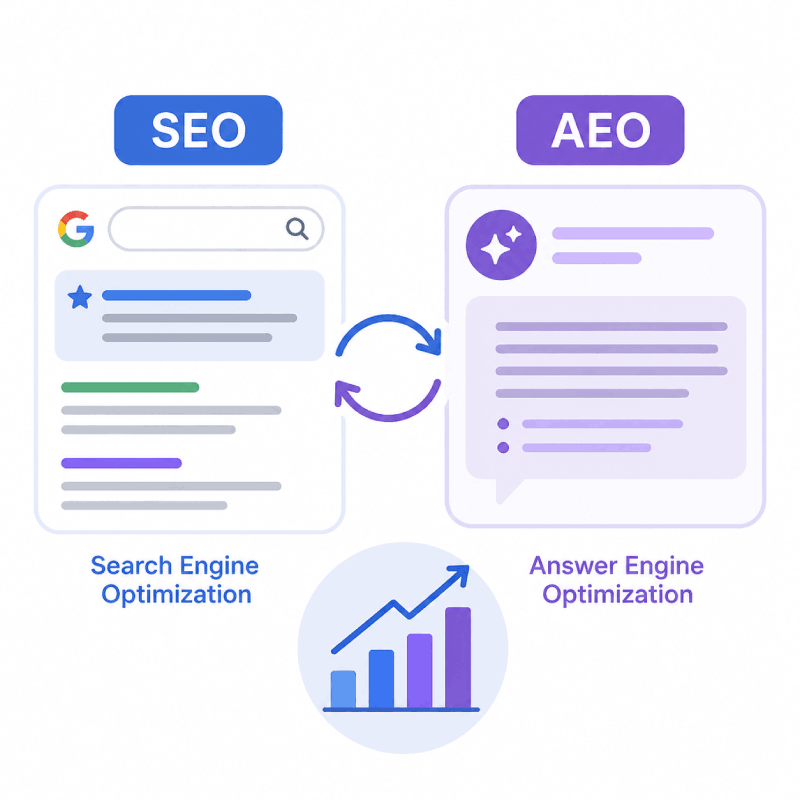
The same page can serve both: a well-structured guide with clear questions and answers can rank in search and be chunked effectively for AI retrieval.
Ein praktisches Playbook für AEO + SEO
Start by mapping a question graph for your topic: the core questions users ask, their variants, and follow-ups. Build pillar pages that answer the main questions in depth, then publish supporting posts that focus on individual questions with concise answers and detailed context.
Structure each page with clear headings, short intros, and FAQ sections so AI systems can isolate answerable chunks. Verwendung schema for FAQs and other entities, and keep technical SEO strong so search engines and AI crawlers can ingest content cleanly.
If you want a deeper look at the tools that monitor this shift, the main guide on LLM-Rangverfolgungstools ist ein nützlicher Ausgangspunkt.
Track citations, prompts, and visibility across AI answer surfaces.
Erkunden Sie den Haupt-Leitfaden für LLM-Rank-TrackingHäufig gestellte Fragen
Ersetzt AEO das traditionelle SEO?
Nein. AEO zielt auf Sichtbarkeit in KI-Antworten und Übersichten ab, während traditionelles SEO auf Rankings und Klicks in klassischen Suchergebnissen abzielt. Die meisten Websites benötigen beides.
Woher weiß ich, ob ich AEO priorisieren sollte?
Prioritise AEO when your audience uses KI-Tools heavily for research, when your topics trigger AI overviews, or when zero-click behaviour is increasing for informational queries.
Kann eine Seite sowohl für AEO als auch für SEO optimiert werden?
Ja. Seiten mit klaren Frage-Antwort-Abschnitten, guter interner Verlinkung und starker technischer SEO können in der Suche ranken und für die KI-Abfrage effektiv in Chunks aufgeteilt werden.
Welche Metriken sollte ich für AEO verfolgen?
Track AI citation share of voice, prompt coverage, branded versus unbranded mentions, and the volume and quality of AI-driven referrals, alongside rankings and traffic.