
AI & SEO
What Is AI Visibility Tracking?
Why It Matters for SEO
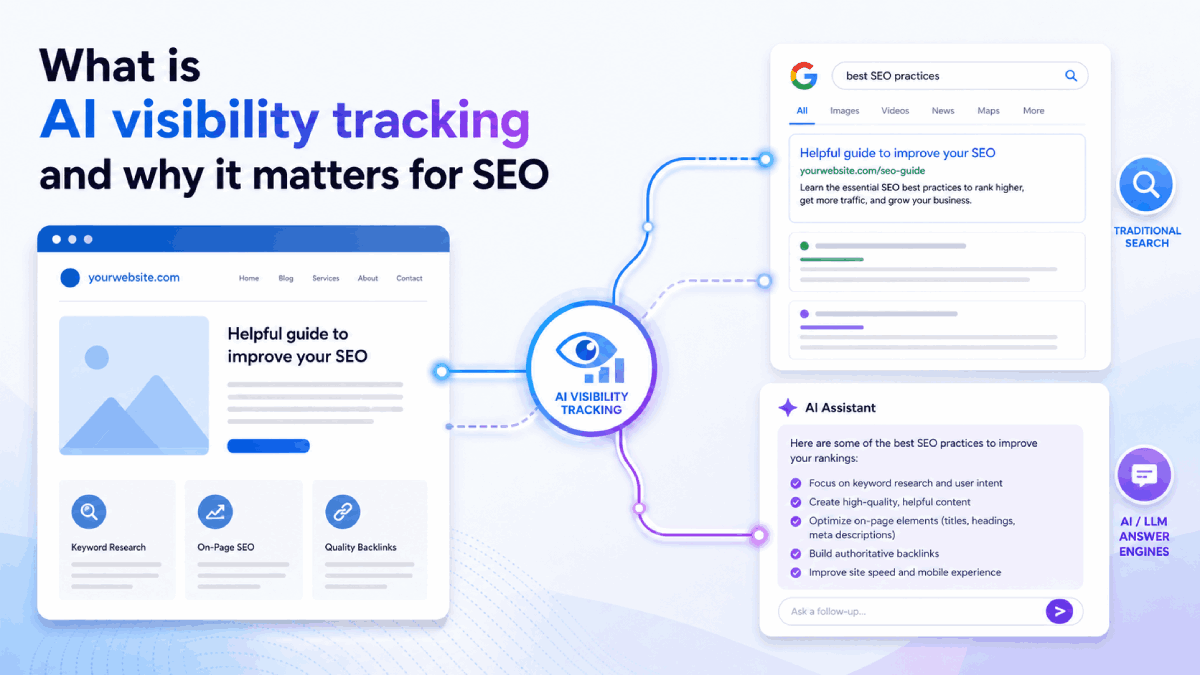
AI visibility tracking is the practice of monitoring how often your brand and pages appear inside AI-powered search experiences — ChatGPT, Google AI Overviews, Gemini, Perplexity, and other answer engines — not just in classic search results.
From Rankings to AI Answers
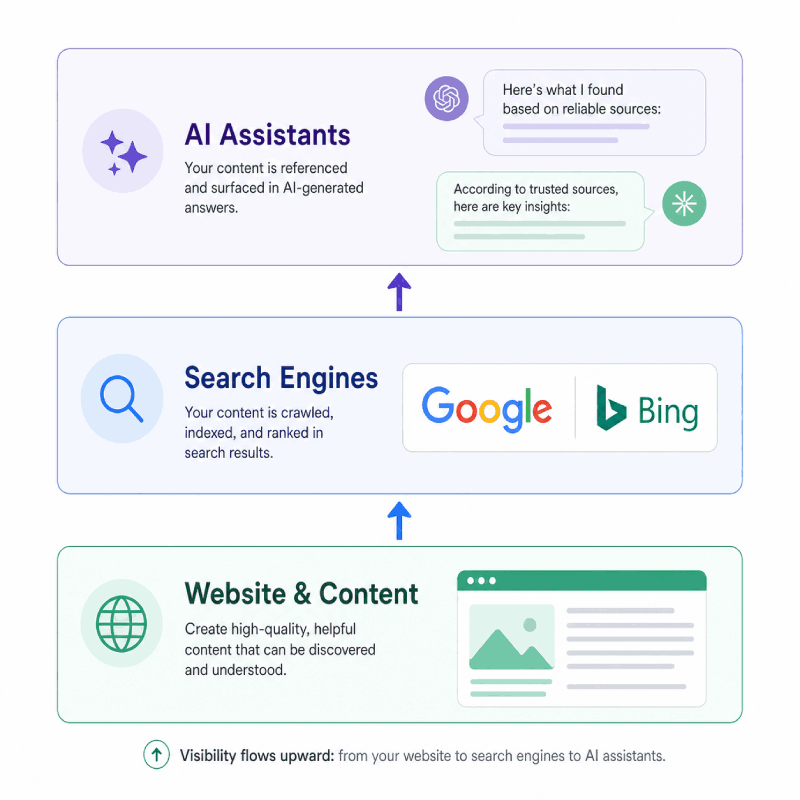
Traditional SEO measures success in impressions, rankings, and clicks from search engines like Google and Bing. AI visibility adds a different layer on top: how often AI systems choose your site as a source when they generate answers, overviews, or product recommendations.
As more informational queries are resolved directly inside AI interfaces — with no click required — brands that only track classic rankings risk becoming invisible in the places where users now spend most of their time.
What AI Visibility Tracking Actually Measures
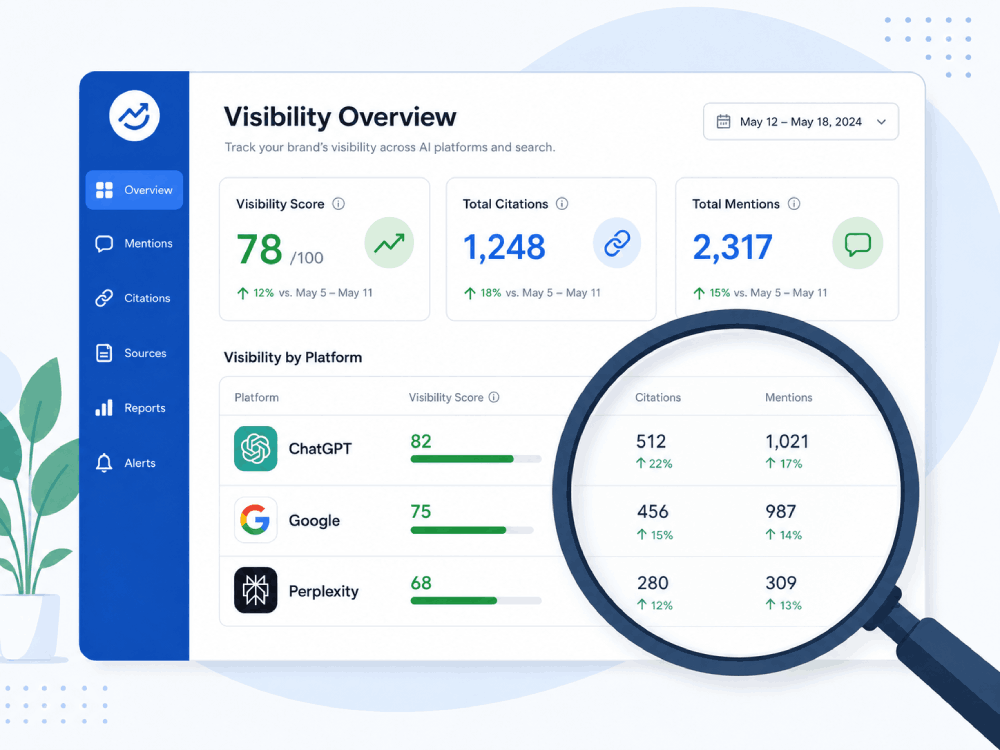
Modern AI visibility tools scan surfaces like ChatGPT, Gemini, Perplexity, AI Overviews, and Copilot to check where your brand appears, which URLs are cited, and how your products or services are described.
Instead of focusing solely on keyword positions, these tools surface metrics such as citation share of voice, prompt coverage, branded versus unbranded mentions, and AI-driven referral traffic back to your site.
Why It Matters for SEO Teams
AI visibility tracking closes the gap between what search engines index and what AI assistants actually show users. Pages that rank well but are never cited by AI may underperform in a world where users ask questions directly to chatbots.
You may also discover that some URLs rarely appear in the top 10 search results but are frequently cited in AI answers — because they explain a concept clearly, sit inside a strong topical cluster, or use clean structured markup.
How to Improve Your AI Visibility
Improving AI visibility starts with making content easy for retrieval systems to understand: use clear headings, give direct answers early on the page, and write concise summaries at the top of each section.
Build topical clusters around your key themes, link supporting articles to a central pillar page, and add structured data for FAQs, products, and entities. This gives AI crawlers structured facts rather than forcing them to guess what your page is about.
Finally, use AI visibility tools to find gaps — important questions where competitors are cited but you are not, or entire surfaces where your brand is absent.
Want to know which tools can track your visibility across ChatGPT, Gemini, and AI Overviews?
See Our Full LLM Rank Tracking Tools GuideFrequently Asked Questions
What is the difference between AI visibility and traditional SEO visibility?
Traditional SEO visibility measures impressions, rankings, and clicks in search results. AI visibility measures how often AI systems reference or cite your brand in conversational answers and overviews.
Do backlinks still matter for AI visibility?
Backlinks still contribute to overall authority, but clarity, page structure, freshness, and topical depth often matter more when AI systems decide which sources to cite in their responses.
Which tools can help track AI visibility?
Specialised AI visibility and LLM SEO platforms monitor citations across ChatGPT, Gemini, Perplexity, AI Overviews, and similar surfaces, telling you which of your URLs are referenced and where you have gaps.
How often should teams audit AI visibility?
Because AI surfaces and citation patterns change quickly, most teams benefit from a monthly or quarterly visibility audit that runs alongside their existing SEO reporting cadence.