
How to Detect AI-Generated Content
AI content detection has become essential as tools like ChatGPT, Claude, and Gemini produce increasingly sophisticated text. Understanding how to identify AI-generated writing helps maintain content authenticity and academic integrity.
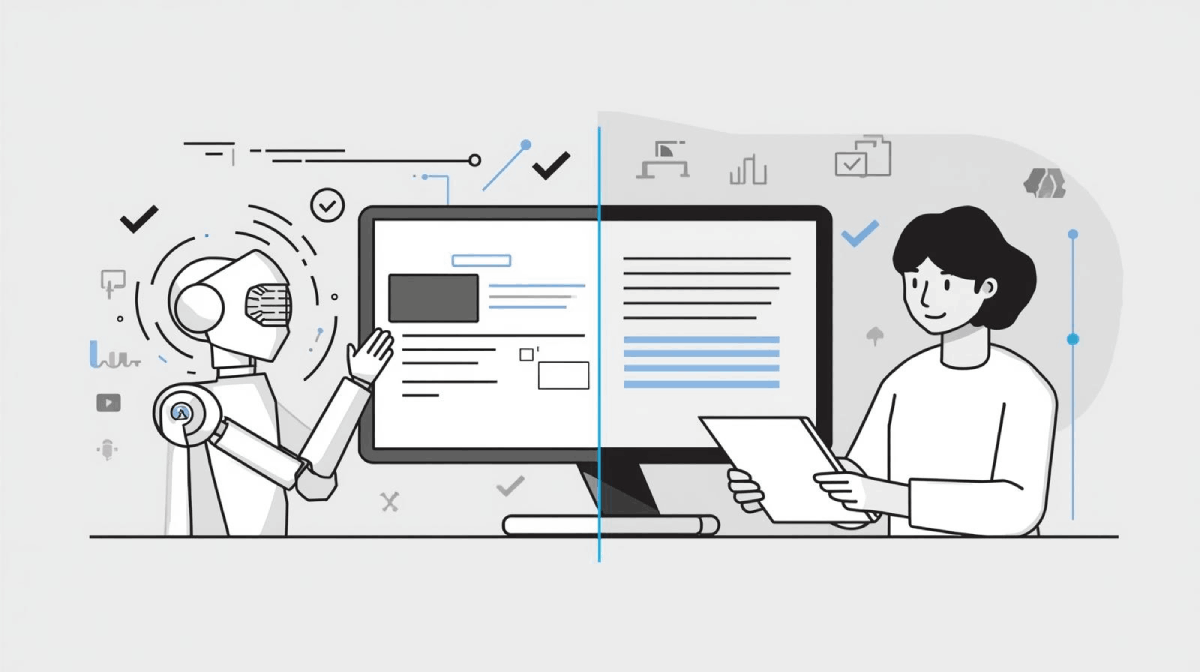
How AI detectors analyze text patterns to identify ChatGPT and other AI models
What is AI Content Detection?
AI content detection uses advanced algorithms to analyze text patterns and determine whether content was written by artificial intelligence or a human. Modern AI detectors examine linguistic patterns, writing style consistency, perplexity metrics, and burstiness to identify AI-generated text with high accuracy.
Professional AI detection tools like GPTZero, Winston AI, and Originality.AI use machine learning models trained on millions of text samples to distinguish between human and AI writing patterns.
Why You Need an AI Detector
- Academic Integrity: Universities and schools use AI detectors to identify ChatGPT-generated student assignments and essays, ensuring original work submission.
- Content Quality Control: Publishers and editors verify that articles maintain authentic human perspective and avoid generic AI-generated content that lacks depth.
- SEO Performance: Google's algorithm updates increasingly prioritize genuine, experience-based content over AI-generated text, making AI detection crucial for search rankings.
- Brand Authenticity: Businesses ensure marketing materials reflect genuine brand voice rather than predictable AI-generated copy.
- Plagiarism Prevention: AI-generated content often borrows heavily from training data, making detection important for maintaining originality.
How AI Detectors Work
AI content detectors analyze multiple linguistic signals to identify machine-generated text:
- Perplexity Analysis: Measures text predictability. AI writing shows lower perplexity with safe, statistically common word choices, while human writing exhibits higher perplexity with creative, unexpected vocabulary.
- Burstiness Metrics: Examines sentence length variation. Humans write erratically (short, long, medium sentences), while AI maintains consistent, uniform structures.
- Linguistic Patterns: Identifies AI indicators like overuse of transitional phrases ("Moreover," "Furthermore," "Additionally"), perfect grammar with no natural errors, and generic opening phrases.
- Stylistic Analysis: Detects AI characteristics including symmetrical paragraphs, consistent formality, lack of personal anecdotes, and absence of contractions.
- Semantic Coherence: Evaluates whether text provides surface-level explanations or demonstrates deep, specific knowledge with unique insights.
Common Signs of AI-Generated Text
Identifying AI-written content becomes easier when you recognize these telltale patterns:
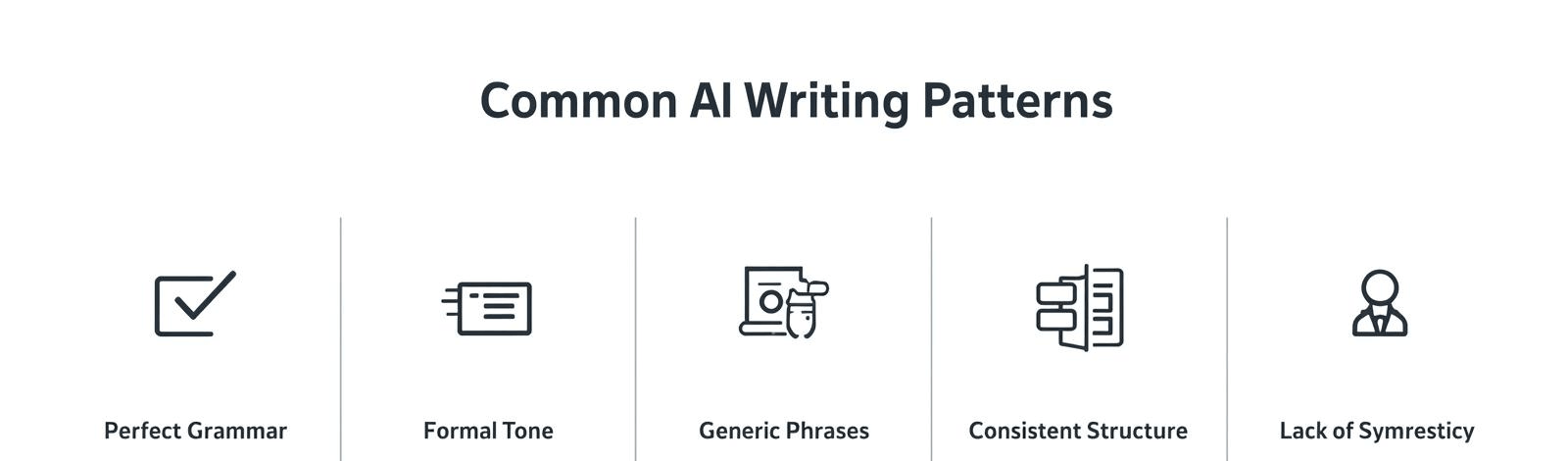
Key indicators that help identify ChatGPT and AI-generated writing
- Consistently perfect grammar with no typos or natural writing imperfections
- Overly formal tone maintained throughout, even in casual contexts
- Generic phrases like "In today's digital landscape" or "It's important to note that"
- Repetitive sentence structures with similar length and complexity
- Lack of specific examples, personal experiences, or unique perspectives
- Diplomatic, balanced language that avoids controversial statements
- Overuse of qualifying words like "typically," "generally," "various," and "often"
- Lists formatted as "Firstly, Secondly, Thirdly" with parallel structure
Best AI Detection Tools in 2026
The AI detection landscape offers various tools with different accuracy levels and features:
- GPTZero: Leading academic AI detector with 95%+ accuracy, specifically trained to detect ChatGPT, GPT-4, and Claude content. Offers sentence-level analysis and batch processing.
- Winston AI: Professional-grade detector achieving 99.6% accuracy rate. Ideal for publishers, content agencies, and businesses requiring high reliability.
- Originality.AI: Combines AI detection with plagiarism checking. Popular among SEO professionals and content marketers for maintaining content authenticity.
- Turnitin: Industry standard for educational institutions, integrated directly into learning management systems to detect AI-generated student work.
- Free AI Detectors: Tools like ours provide 75-85% accuracy suitable for quick checks, personal use, and preliminary screening before using premium tools.
ChatGPT Detection: Specific Patterns
ChatGPT exhibits distinct patterns that make detection possible:
- Formulaic Introductions: ChatGPT often starts with "In recent years" or similar time-based opening phrases
- Numbered Lists: Prefers structured lists with parallel construction and balanced point length
- Conclusion Patterns: Ends with summary statements like "In conclusion" or "To sum up"
- Hedging Language: Uses cautious phrasing like "it's worth noting," "generally speaking," or "in most cases"
- Balanced Perspectives: Presents multiple viewpoints without committing to strong opinions
Improving Human Detection Scores
If your human-written content is being flagged as AI, try these techniques:
- Add personal anecdotes and specific real-world examples from your experience
- Vary sentence length dramatically – mix very short sentences with longer, complex ones
- Use contractions naturally ("it's" instead of "it is," "don't" instead of "do not")
- Include informal language, idioms, or colloquialisms appropriate to your audience
- Express strong opinions or unique perspectives rather than balanced, diplomatic statements
- Allow minor grammatical imperfections that occur in natural human writing
- Add rhetorical questions and direct reader engagement
Frequently Asked Questions
AI detector accuracy varies by tool and implementation. Free AI detectors typically achieve 75-85% accuracy, suitable for quick checks and preliminary screening. Professional tools like Winston AI and GPTZero reach 95-99% accuracy through custom-trained neural networks and extensive dataset training. Accuracy depends on text length (minimum 50-100 words recommended), writing style complexity, and whether content was edited after AI generation. For critical use cases like academic integrity or professional publishing, combining multiple detection methods provides the most reliable results.
Most AI detectors identify AI-generated content generally rather than pinpointing specific models, because GPT-4, Claude, Gemini, and other large language models share similar linguistic patterns. All exhibit low perplexity, consistent formatting, and formal tone characteristics. However, some advanced tools can suggest likely models based on subtle differences: GPT-4 tends toward diplomatic language, Claude uses more conversational structures, and Gemini sometimes produces more verbose outputs. For practical purposes, detecting "AI vs human" matters more than identifying which specific AI model generated the text.
False positives occur when human writing exhibits AI-like characteristics such as formal academic tone, perfect grammar, consistent structure, and diplomatic language. Technical writing, research papers, and professional content naturally display these patterns. To reduce false positives: vary sentence length dramatically, include personal experiences and specific examples, use contractions and informal language where appropriate, express unique opinions, and allow minor natural imperfections. Non-native English speakers sometimes face higher false positive rates because their writing can appear more formal or structured than native speakers' natural style.
Google's official stance focuses on content quality rather than creation method. However, Google's algorithms increasingly prioritize E-E-A-T (Experience, Expertise, Authoritativeness, Trustworthiness), which AI-generated content often lacks. Pure AI content typically provides surface-level information without unique insights, personal experience, or original research – factors that limit rankings. The March 2024 Helpful Content Update specifically targeted low-quality AI-generated pages. Best practice: use AI as a research tool or outline generator, then substantially rewrite with personal expertise, specific examples, and unique perspectives to create genuinely helpful content that ranks well.
AI humanizer tools like Undetectable AI, QuillBot, and HIX Bypass work by rewriting AI-generated text to mimic human writing patterns – varying sentence structure, adding natural imperfections, using contractions, and reducing formal transitional phrases. Advanced humanizers achieve 85-99% bypass rates on most AI detectors by introducing burstiness (sentence length variation) and increasing perplexity (less predictable word choices). However, effectiveness varies: simple paraphrasing tools struggle against sophisticated detectors, while premium humanizers using advanced NLP models perform significantly better. The most reliable approach combines AI humanization with manual editing to add personal insights and authentic voice.