
AEO & SEO
Answer Engine Optimization vs Traditional SEO
A Practical Playbook
Answer Engine Optimization focuses on how AI systems retrieve, synthesise, and present information as direct answers, while traditional SEO focuses on how search engines crawl, index, and rank pages in results.
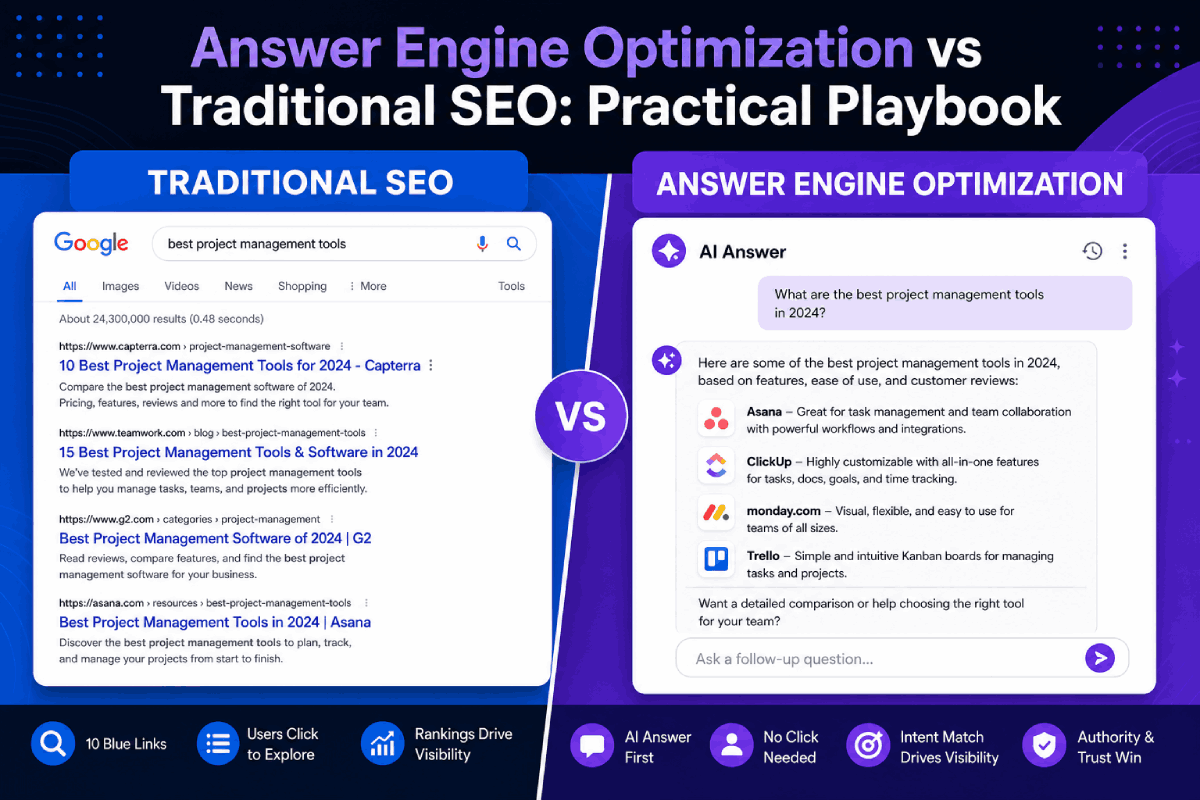
How Traditional SEO Works
Traditional SEO is built around keywords, pages, and rankings: you research search demand, create content mapped to intent, and optimise on-page elements, technical health, and link profiles to win positions in SERPs.
Success is measured in impressions, click-through rates, and organic sessions.
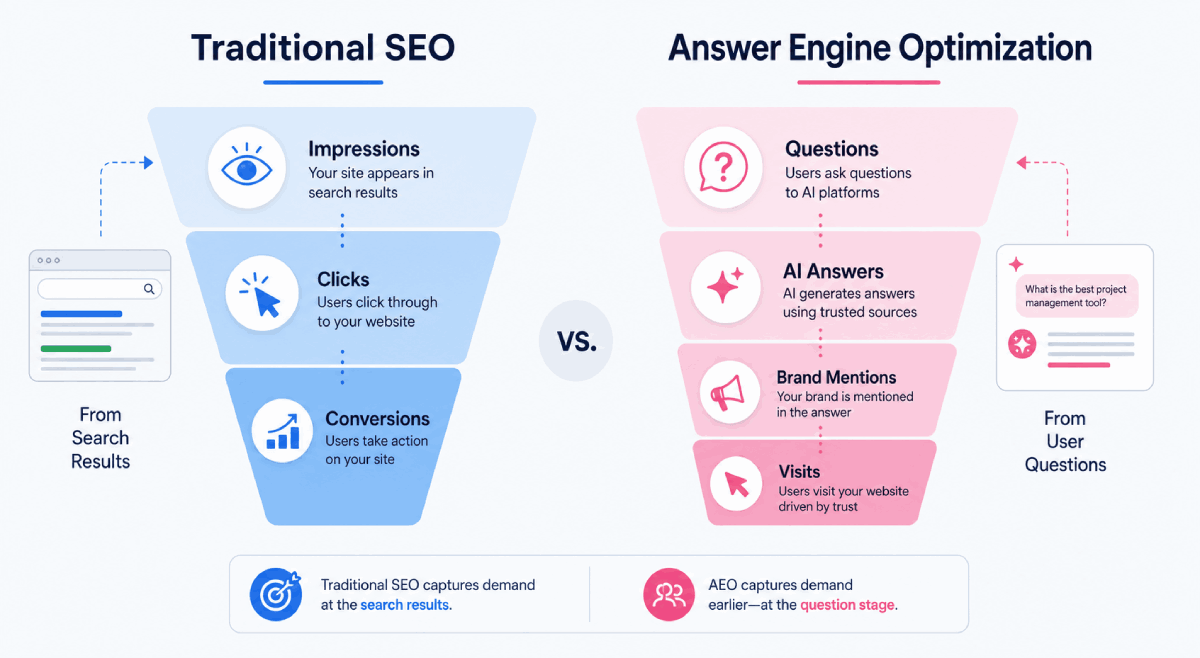
How Answer Engine Optimization Differs
AEO assumes that many users no longer click through to websites for every question; instead, they read answers in AI overviews, chat interfaces, and other zero-click experiences. Rather than optimising a whole page around a keyword, you optimise content chunks around specific questions and entities.
Signals shift toward semantic clarity, chunk structure, freshness, and explicit crawl paths for AI bots and LLMs.
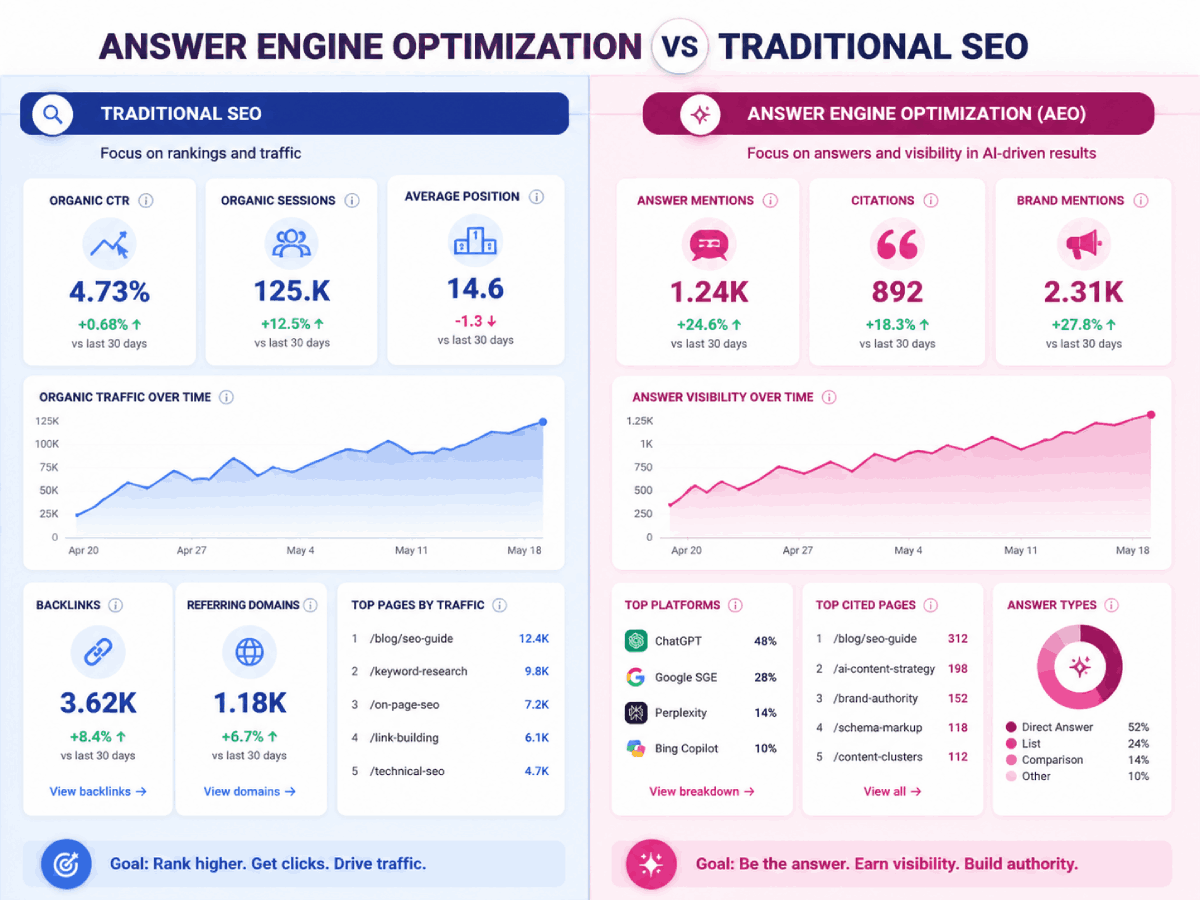
Why You Need Both AEO and SEO
Informational search is shifting toward conversational agents and zero-click SERPs, while transactional and navigational queries still depend heavily on classic search results. A hybrid approach lets you maintain organic traffic where clicks matter and build presence in AI answers where users stay inside the interface.
The same page can serve both: a well-structured guide with clear questions and answers can rank in search and be chunked effectively for AI retrieval.
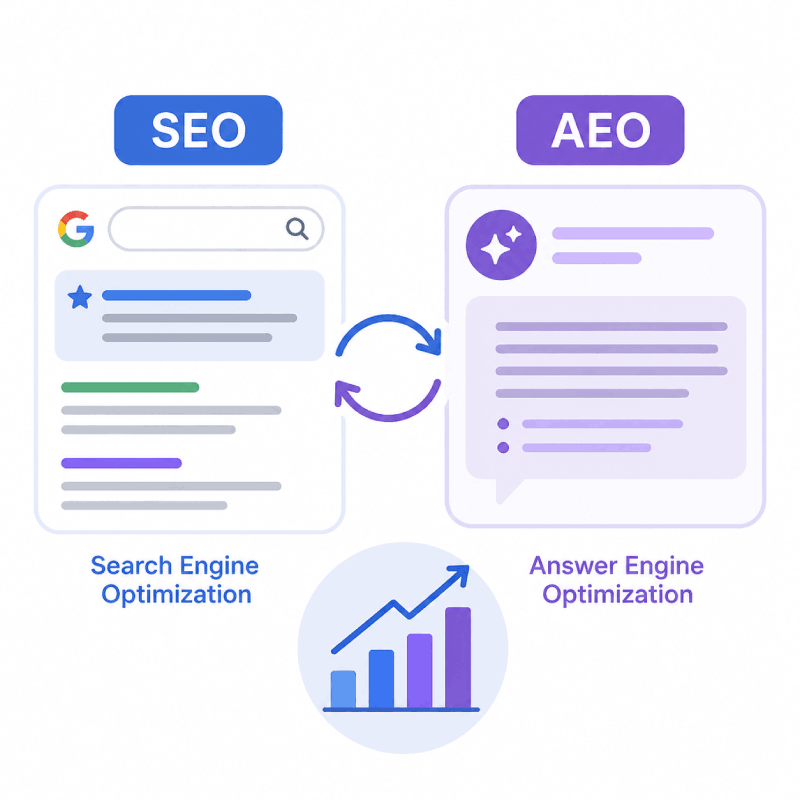
A Practical Playbook for AEO + SEO
Start by mapping a question graph for your topic: the core questions users ask, their variants, and follow-ups. Build pillar pages that answer the main questions in depth, then publish supporting posts that focus on individual questions with concise answers and detailed context.
Structure each page with clear headings, short intros, and FAQ sections so AI systems can isolate answerable chunks. Use schema for FAQs and other entities, and keep technical SEO strong so search engines and AI crawlers can ingest content cleanly.
If you want a deeper look at the tools that monitor this shift, the main guide on LLM rank tracking tools is a useful place to start.
Track citations, prompts, and visibility across AI answer surfaces.
Explore the Main LLM Rank Tracking GuideFrequently Asked Questions
Does AEO replace traditional SEO?
No. AEO targets visibility inside AI answers and overviews, while traditional SEO targets rankings and clicks in classic search results. Most sites need both.
How do I know if I should prioritise AEO?
Prioritise AEO when your audience uses AI tools heavily for research, when your topics trigger AI overviews, or when zero-click behaviour is increasing for informational queries.
Can one page be optimised for both AEO and SEO?
Yes. Pages with clear question-and-answer sections, good internal linking, and strong technical SEO can rank in search and be chunked effectively for AI retrieval.
What metrics should I track for AEO?
Track AI citation share of voice, prompt coverage, branded versus unbranded mentions, and the volume and quality of AI-driven referrals, alongside rankings and traffic.